VDA 19.1 2025 “Technical Cleanliness Testing Standard”: New Requirements—SEM/EDX Testing
Driven by the dual forces of electrification and intelligent technology, the automotive industry is undergoing a profound transformation, which also presents unprecedented new challenges for cleanliness standards in the manufacturing and assembly of traditional components.
In key component areas such as battery systems, motor assemblies, and lightweight structural parts, product tolerance for particulate contamination has significantly decreased. Furthermore, within smart manufacturing systems, the widespread adoption of automated assembly technologies and high-precision sensors has further raised cleanliness control requirements across the entire supply chain.
For a long time, VDA19.1 has served as the core cleanliness standard for automotive components across design, production, and testing phases. It primarily focuses on macro-particles ≥50μm, addressing traditional failure issues such as wear, seizing, and fluid channel blockages in mechanical components like engines, transmissions, and drivetrains. However, it fails to adequately cover the associated failure risks of high-voltage electrical and precision electronic components.
The core electrification and intelligent systems of next-generation vehicles have a much lower tolerance threshold for particulate matter than traditional models. For example: when a LiDAR window is covered by a 10-micron particle, the intensity of the reflected signal decreases by more than 20%, directly affecting the normal operation of related intelligent functions; a single metal particle with a diameter of just 20 microns can cause a short circuit and fire in a power battery; a tiny residue of sealant can cause transmission fluid leakage, leading to drivetrain failure.
In summary, the technical framework of traditional cleanliness standards can no longer meet the refined control requirements for particulate contamination in the high-voltage electrical and intelligent systems of next-generation vehicles. The upgrading of industry standards urgently requires a shift from “mechanical system protection” to “full lifecycle reliability assurance for electrical and intelligent systems.” This shift is necessary to align with the high-precision, high-voltage, and highly coupled technical characteristics of automotive products, thereby eliminating systemic operational risks caused by particulate contamination at their source.
A key aspect of the new VDA 19.1 2025 standard lies in the expansion of analytical methods
SEM/EDX Analysis
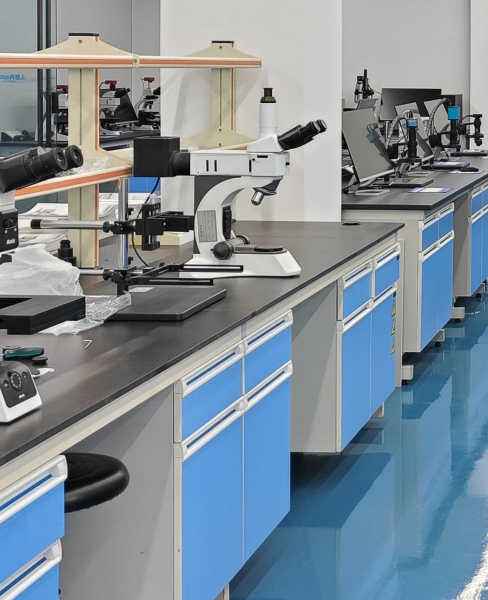
SEM/EDX analysis has been elevated from an in-depth method to a standard analytical procedure. This method enables precise analysis of the compositional makeup of both metallic and non-metallic particles, allowing for classification based on hardness levels. Combined with high-resolution electron microscope images, it facilitates accurate traceability.
XIENS provides SEM/EDX analysis equipment that fully complies with the requirements of the VDA 19.1 2025 standard.

 English
 Français
 Русский
 Español
 Português
 عربي
عربي Get A Quote



 IPv6 network supported