New Technical Cleanliness Standards for MCCP Micro-Channel Cold Plates
As AI computing architecture fully enters the Blackwell and Rubin iteration era, the power consumption of a single GPU has exceeded the 1000W threshold, leading to explosive growth in heat density for high-end computing hardware. Traditional air-cooling solutions, constrained by limited heat dissipation efficiency, can no longer accommodate the concentrated thermal load of ultra-high-power AI servers. Consequently, Micro-Channel Cold Plates (MCCP) have become the mainstream thermal solution adopted by high-performance computing manufacturers to sustain extreme heat exchange efficiency. However, alongside MCCP’s superior cooling performance, its ultra-precise microstructure imposes unprecedentedly stringent requirements on industrial technical cleanliness. Professional MCCP technical cleanliness testing has therefore become a critical guarantee and a core bottleneck for the long-term stable operation of modern AI computing infrastructure.
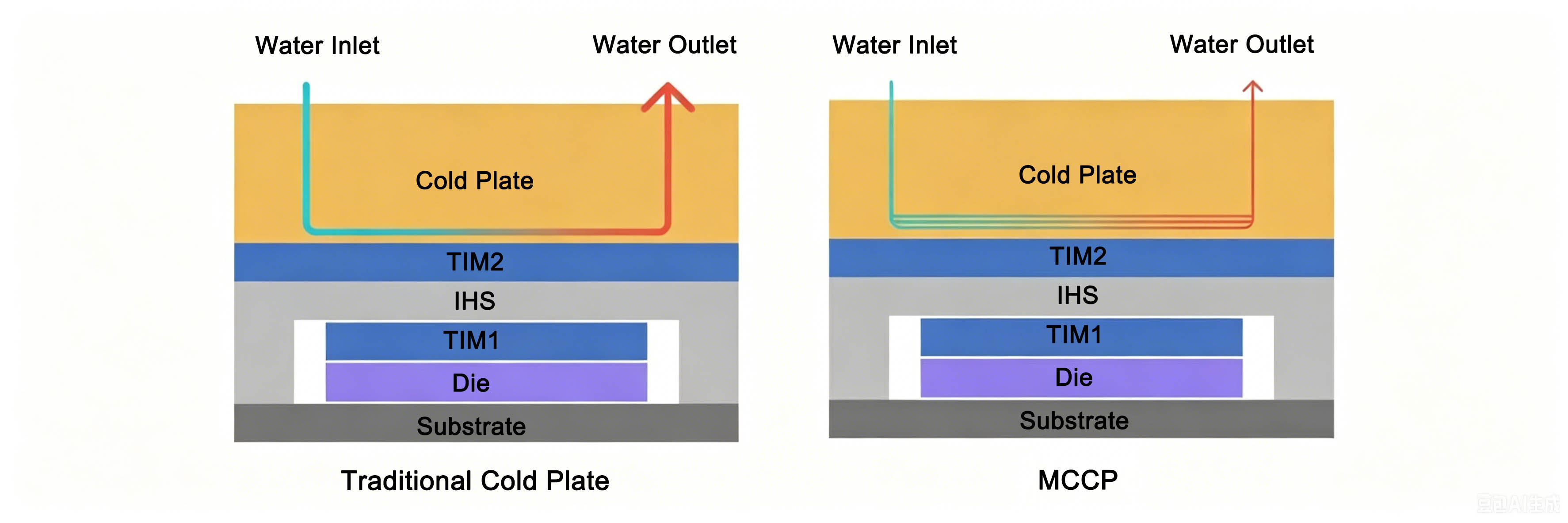
MCCP achieves extreme thermal performance through densely arranged microchannels with a width ranging from 100μm to 300μm, which maximizes the fluid heat exchange area and effectively reduces overall thermal resistance from a fluid mechanics perspective. While this structural design delivers powerful cooling capabilities, it also makes MCCP devices extremely sensitive to tiny particulate contaminants, raising higher standards for liquid cooling component cleanliness control. In conventional liquid cooling systems, micron-level metal debris and manufacturing residues rarely cause severe functional failures. In MCCP microchannels, however, hard particles with a diameter equivalent to half the channel width can easily accumulate at inlets, bending sections and flow dead zones, resulting in irreversible channel blockage and cascading device malfunctions. This explains why strict particulate contamination detection is indispensable for MCCP mass production and application.
Uncontrolled particle contamination and microchannel clogging inside MCCP will trigger a series of catastrophic failures that severely undermine AI system stability and computing performance, fully demonstrating the importance of standardized technical cleanliness management for high-end liquid cooling components:
1. Local Hot Spot Generation
Microchannel blockage restricts coolant flow, causing localized heat dissipation failure. The insufficient fluid circulation fails to remove heat generated by the GPU core, resulting in rapid temperature spikes and persistent hot spots that threaten chip operational safety.
2. Erosion and Corrosion-Induced Liquid Leakage
The ultra-high fluid velocity inside microchannels accelerates the collision of residual microscopic metal particles against the channel inner wall. Continuous particle impact wears down the protective coating, aggravating electrochemical erosion and corrosion. Long-term operation will eventually cause wall perforation and coolant leakage, leading to hardware damage.
3. Forced System Frequency Reduction and Computing Performance Degradation
To protect high-value GPU hardware from overheating and structural damage, the server system will automatically activate thermal protection mechanisms and force frequency throttling. This results in significant computing power attenuation, reduced operational efficiency, and substantial economic losses for high-load AI computing scenarios.
Transformation of Cleanliness Inspection Standards Driven by MCCP Application
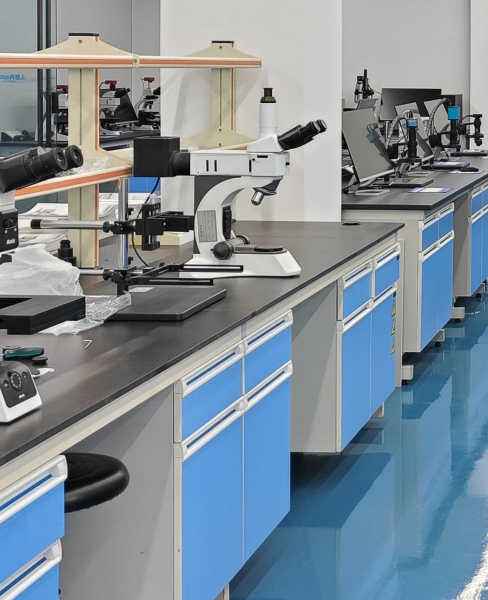
The widespread adoption of micro-channel cold plates has rendered traditional cleanliness testing methods inadequate for high-precision cooling components. Standard professional MCCP technical cleanliness validation adopts internal flushing and solvent extraction procedures to fully collect internal residual contaminants onto membrane filters. The entire cleanliness testing process requires a strictly controlled laboratory environment to avoid external particulate interference and ensure accurate, repeatable detection results that comply with industrial precision manufacturing requirements.
Moreover, the industry’s particulate control threshold has been comprehensively upgraded driven by high-power AI cooling demands. Traditional liquid cooling component inspections mainly focus on contaminants above 100μm to 200μm. In contrast, MCCP supply chain quality specifications have tightened significantly, requiring precise monitoring of particles as small as 50μm and even finer micro-pollutants. This upgrade mandates high-resolution automatic optical analysis systems in professional laboratories to accurately quantify contaminant particle size, particle count, and distribution characteristics, forming a complete set of precision cleanliness inspection solutions.
The global AI industry competition continues to accelerate throughout 2026. While market competition appears to focus on computing power iteration, the underlying competition lies in precision manufacturing capability and refined technical cleanliness control. With the large-scale popularization of MCCP liquid cooling technology, thermal management components have evolved from ordinary mechanical parts to near-semiconductor-grade precision components, making professional cleanliness testing a standard link in the entire industrial chain.
Complying strictly with VDA 19.1 and ISO 16232 international technical cleanliness standards, we provide one-stop professional services including MCCP technical cleanliness testing, contaminant analysis, and laboratory system construction solutions. By implementing full-process cleanliness monitoring for precision liquid cooling components, we eliminate hidden risks such as microchannel blockage, thermal throttling, and liquid leakage from the source, building a solid reliability barrier for high-end AI computing infrastructure and supporting stable mass production of high-precision MCCP liquid cooling products.

 English
 Français
 Русский
 Español
 Português
 عربي
عربي Get A Quote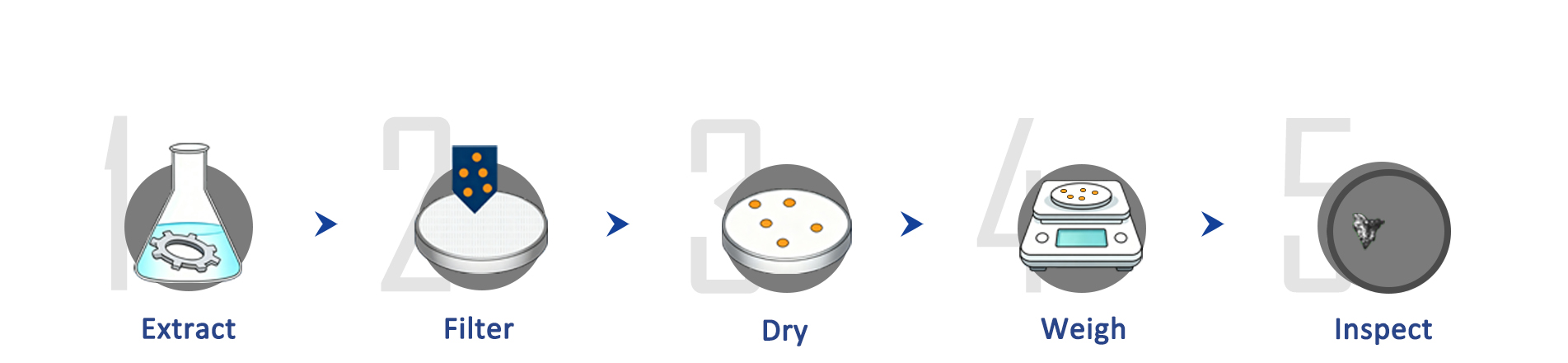




 IPv6 network supported