Leave A Message
If you are interested in our products and want to know more details,please leave a message here,we will reply you as soon as we can.

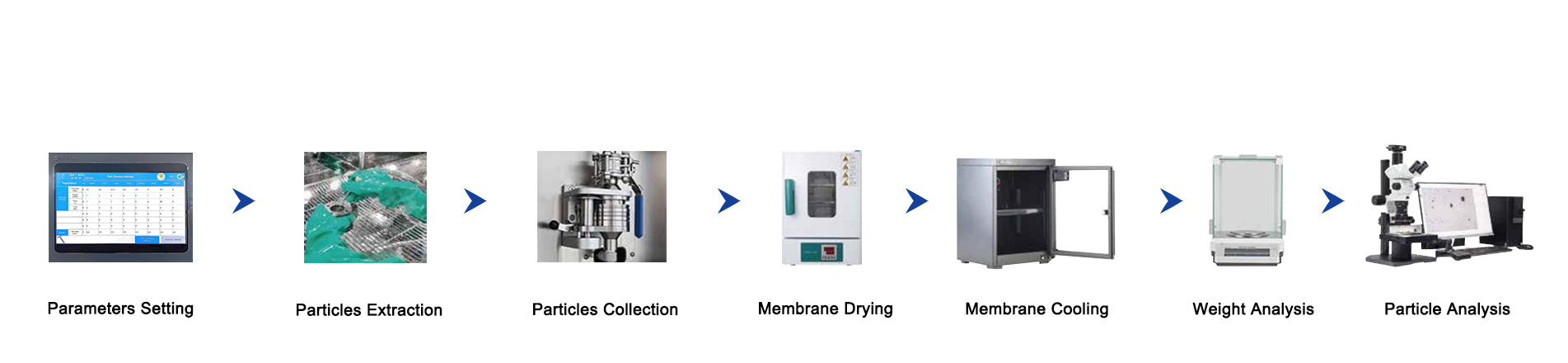
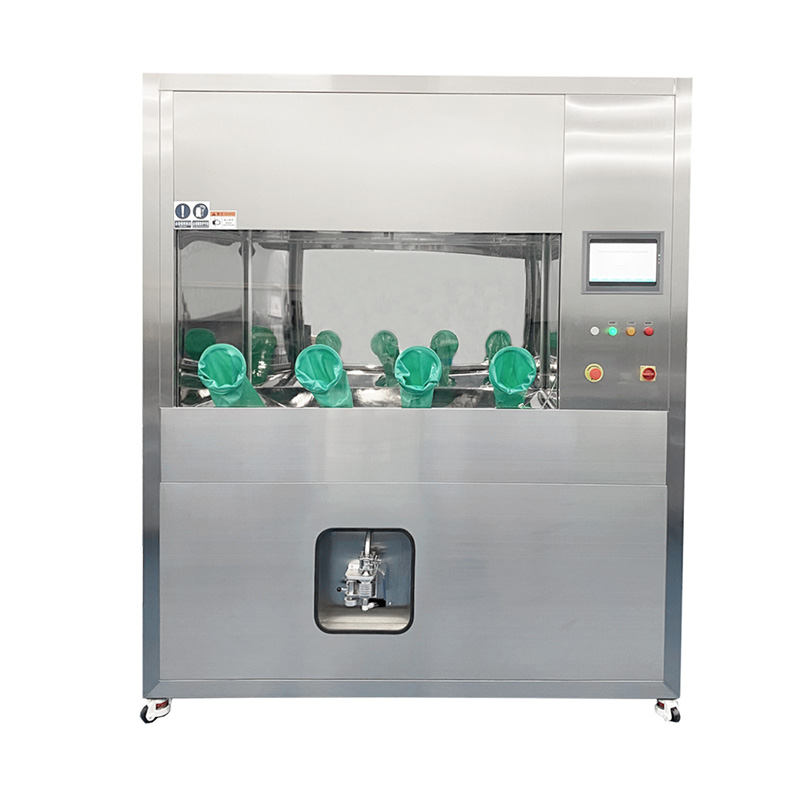
CLS400U integrates spray cleaning, ultrasound cleaning, membrane sample preparation (particle extraction), online filtration and recovery of cleaning agents, and circulating fine filtration into one. The wet extraction system, the most commonly used extraction method, covers a large portion of the requirements for particle extraction from components.
| Description |
Model
-CLS400U
Purpose of the device
-Used for cleaning and extracting particles from components.
Equipment principle
-Wet extraction: Using a specified liquid medium, flushing the surface of components with a standard nozzle within a set pressure range to separate solid particles from the components, which are then collected on the detection filter membrane.
-Ultrasound extraction:By utilizing the cavitation effect of ultrasonic waves in liquids, bubbles are generated in the liquid. These bubbles come into contact with the surface of the product and collapse, thereby disrupting insoluble attached particulate contaminants, causing them to disperse in the solution, and ultimately achieving the effect of cleaning particulate contaminants from the surface of the parts.
Equipment advantages
-The equipment has real time display of equipment working status, continuously adjustable parameters.
-After cleaning the parts, a filter membrane sample can be obtained directly to reduce the retention time of particulate contamination in the cleaning agent; which standardizes the cleanliness testing control process and improves testing efficiency.
-The operating space for cleaning parts is relatively independent, with a built-in air laminar flow system to purify the cleaning operating environment, effectively isolate the cleaning area and external environment, and build a clean operating platform for cleaning and testing.
-Reference standards for equipment design and operation methods:VDA19.1 2015 edition, ISO16232 2018 edition, and customer defined standards.
Structural overview
|
1 |
Pressure cleaning chamber/Ultrasound |
5 |
Swivel wheel |
|
2 |
Protective glove |
6 |
Operating panel |
|
3 |
PLC programmable controller |
7 |
Foot switch |
|
4 |
Distribution box |
8 |
Three-stage filter membrane sample preparation |
| Internal Structure |
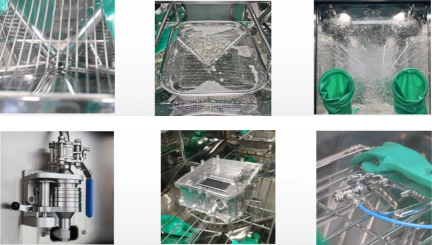
| Main function |
Ultrasonic automatic cleaning
Ultrasonic vibration cleaning utilizes the direct and indirect effects of ultrasonic waves' cavitation, acceleration, and rectilinear flow in liquids on the liquid and contaminants. It generates pressure of 10¹²-10¹³ Pa and local temperature adjustment around the bubbles, which destroys the adhesion of insoluble particulate contaminants, causing them to disperse in the solution. Ultimately, it achieves the effect of cleaning particulate contaminants from the surface of components. The cleaning effect is superior to pressure cleaning, with better cleaning uniformity. This function is integrated into the equipment, enabling fully automatic ultrasonic cleaning and a higher degree of automation in cleaning and detection.
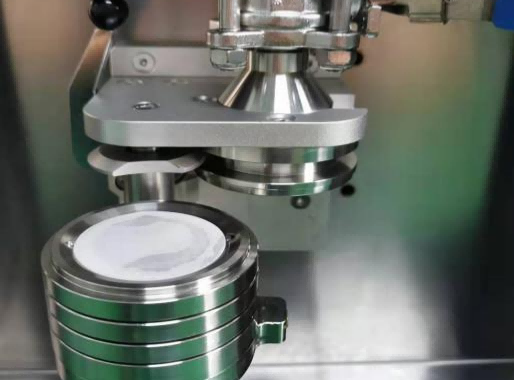
Filter membrane sample preparation device
The cleaning agents after cleaning the components can be synchronously and automatically filtered and recycled through an online filter, and then timely collecting particulate contamination on the surface of the components in the cleaning agents to the surface of the detection filter membrane. No need for manual operation to filter cleaning agents.
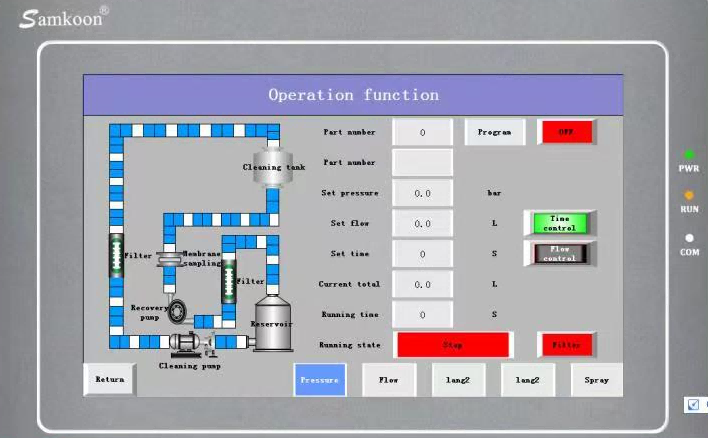
Cleaning parameter settings
The storage cleaning parameters of cleaning pressure, flow parameters, flow rate settings, cleaning time, cleaning mode can be adjusted according to different cleanliness detection standards.
| Technical parameter |
|
CLS-400U Technical Cleanliness Cabinet |
||
|
Material |
The equipment frame and appearance are all made of 304 stainless steel. |
|
|
Function |
Pressure cleaning, ultrasound cleaning, circulation cleaning, single cleaning, liquid addition, liquid drainage, manual testing, parameter setting, etc. |
|
|
Overall dimensions |
1100*800*2100mm(Including casters 2100mm) |
|
|
Operation chamber |
Analysis area |
600 * 600 * 800mm (L*W*H) |
|
Tank dimensions |
400*200(L*D) |
|
|
Control system |
PLC control, software with flushing option and programmable flushing volume. |
|
|
Maximum loading capacity |
≥30 Kg(Uniform loading, non-point loading) |
|
|
Working pressure |
0.1-0.45Mpa (customizable) |
|
|
Flow rate |
1L/min-5.0L/min (customizable) |
|
|
Ultrasound |
Tank type |
Pressure/ultrasonic integrated tank |
|
Ultrasound power |
0-600W(adjustable) |
|
|
Power density |
According to VDA19.1 10-20W/L(adjustable) |
|
|
Frequency |
40KHZ |
|
|
Storage and filtration |
Testing membrane size |
Φ47 – 50mm |
|
Tank capacity |
30L (customizable) |
|
|
Filtration system |
1μm、0.2μm filter (absolute filtration) |
|
|
Membrane system |
3-stage cascade filtration system |
|
|
Rinsing nozzle |
Φ2.5 mm column nozzle |
|
|
Blank value |
According to the accomendations of ISO, the maximum particle size must be less than 50% of the allowable particle size on the part/product, and the particle quantity within the blank value shall not exceed 10% of the cleanliness level required for the component. Equipment capacity: Pollutant weight 0.3mg, Metal particles ≤ 100um(particles in a Class 10,000 cleanroom≤ 50um) |
|
|
Cleaning medium |
Recommended hydrocarbon solvents (AP760/ISO Sparl) |
|
|
Operation protective gloves |
Length 360mm, nitrile rubber |
|
|
Chamber door |
Electric lifting |
|
|
PLC parameter group |
Pre-set 99 groups (maximum 2000 groups) |
|
|
Alarm |
Liquid level alarm for storage tank, filter element expiration prompt alarm, mis-operation/fault alarm; provide solution |
|
|
HEPA filter |
99,995% efficiency for particles bigger than 0.3 µm |
|
|
Power |
AC220V,50Hz; Rated power: 900W |
|
|
Work noise |
Less than 70db |
|
|
Equipment activation |
≥98% |
|
|
Equipment failure rate |
≤2% |
|
|
Totally weight |
About 350KG |
|
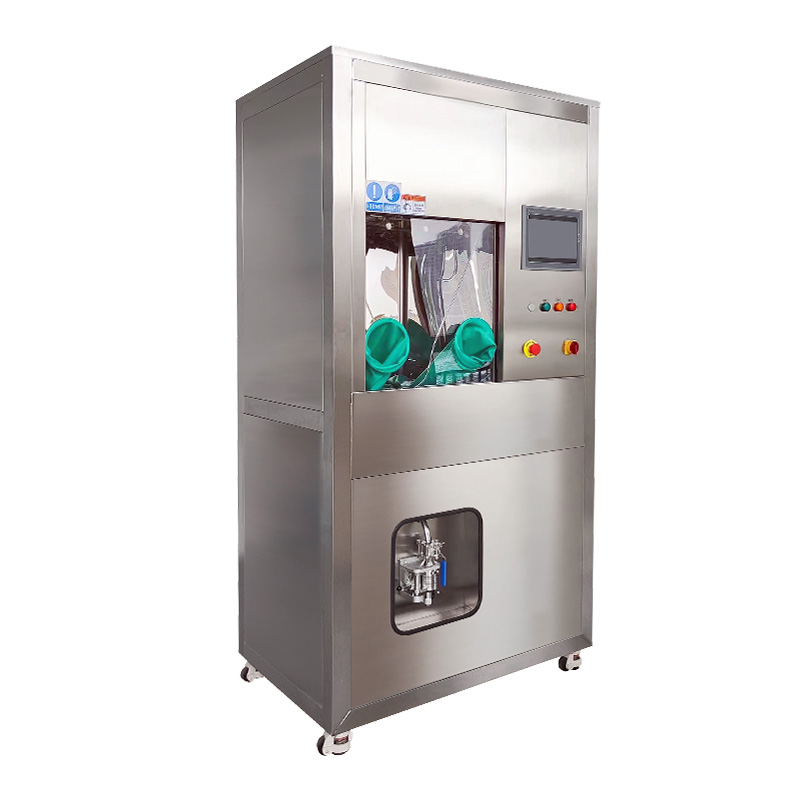
CLS300U integrates spray cleaning, ultrasound cleaning, membrane sample preparation (particle extraction), online filtration and recovery of cleaning agents, and circulating fine filtration into one. The wet extraction system, the most commonly used extraction method, covers a large portion of the requirements for particle extraction from components.
Read More
CLS400U integrates spray cleaning, ultrasound cleaning, membrane sample preparation (particle extraction), online filtration and recovery of cleaning agents, and circulating fine filtration into one. The wet extraction system, the most commonly used extraction method, covers a large portion of the requirements for particle extraction from components.
Read More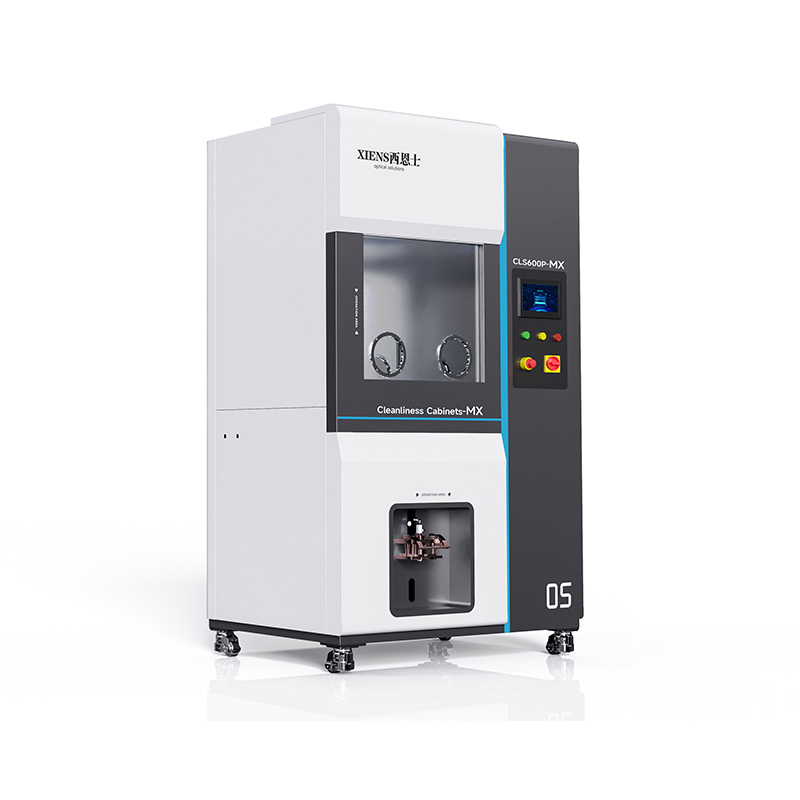
CLS600P integrates spray cleaning, side wall spray self-cleaning, membrane sample preparation (particle extraction), online filtration and recovery of cleaning agents, and circulating fine filtration into one. The wet extraction system, the most commonly used extraction method, covers a large portion of the requirements for particle extraction from components.
Read More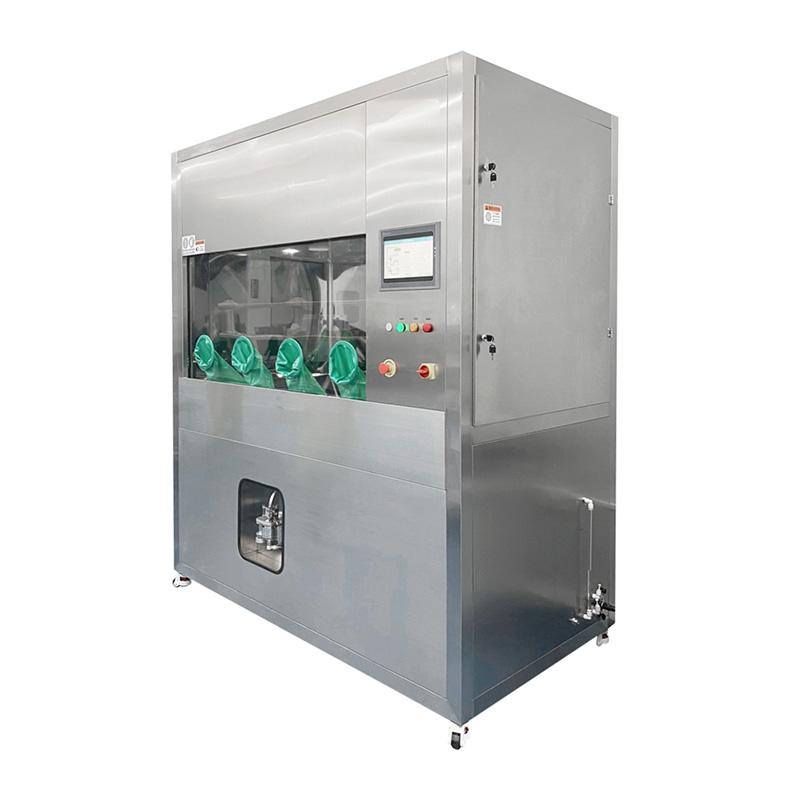
CLS900P integrates spray cleaning, side wall spray self-cleaning, membrane sample preparation (particle extraction), online filtration and recovery of cleaning agents, and circulating fine filtration into one. The wet extraction system, the most commonly used extraction method, covers a large portion of the requirements for particle extraction from components.
Read More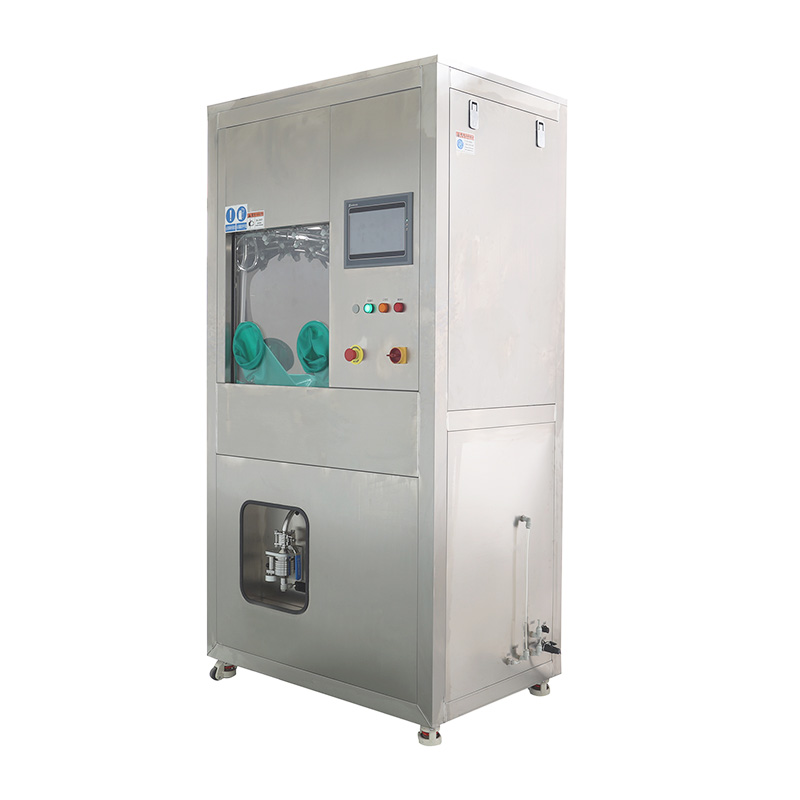
CLS1100P integrates spray cleaning, side wall spray self-cleaning, membrane sample preparation (particle extraction), online filtration and recovery of cleaning agents, and circulating fine filtration into one. The wet extraction system, the most commonly used extraction method, covers a large portion of the requirements for particle extraction from components.
Read More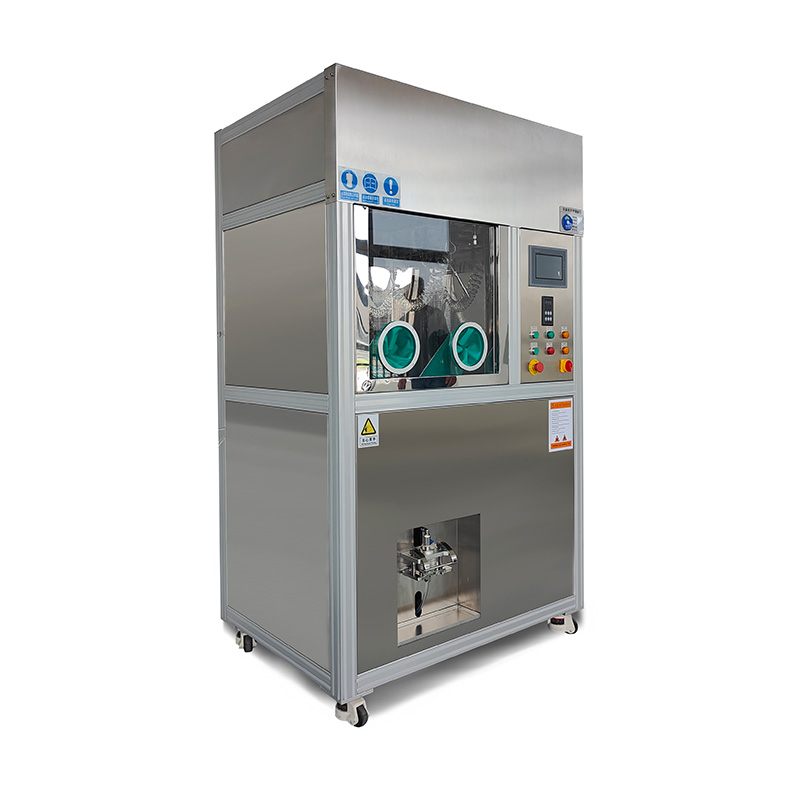
CLS-A Air Blow Cleanliness Cabinet integrates spray cleaning, air blow, side wall spray self-cleaning, membrane sample preparation (particle extraction), online filtration and recovery of cleaning agents, and circulating fine filtration into one. The wet extraction system, the most commonly used extraction method, covers a large portion of the requirements for particle extraction from components.
Read More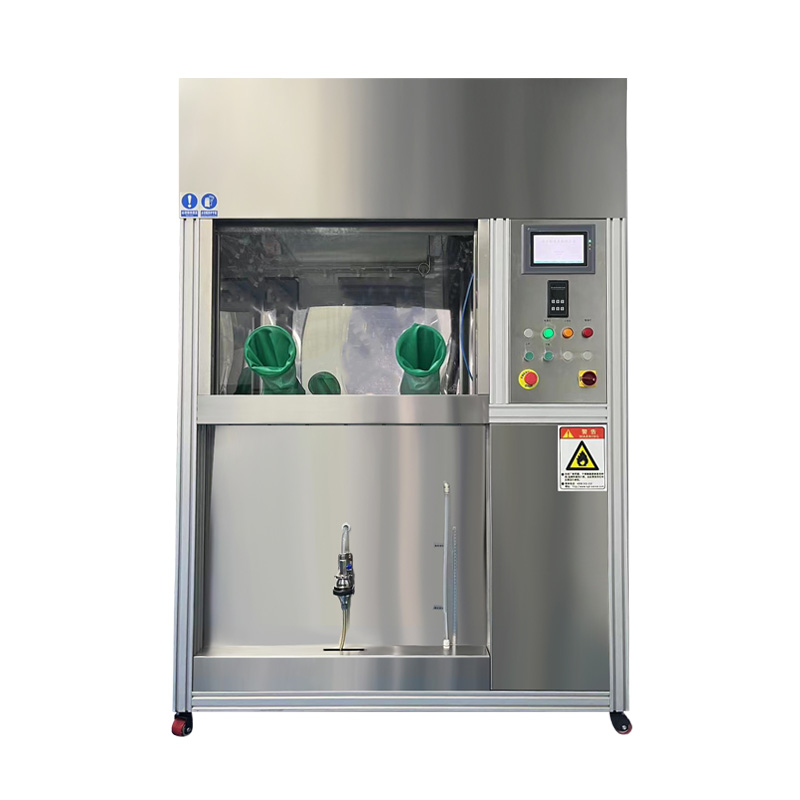
CLS-IR Internal Rinsing Cleanliness Cabinet integrates spray cleaning, internal rinsing, side wall spray self-cleaning, membrane sample preparation (particle extraction), online filtration and recovery of cleaning agents, and circulating fine filtration into one. The wet extraction system, the most commonly used extraction method, covers a large portion of the requirements for particle extraction from components.
Read More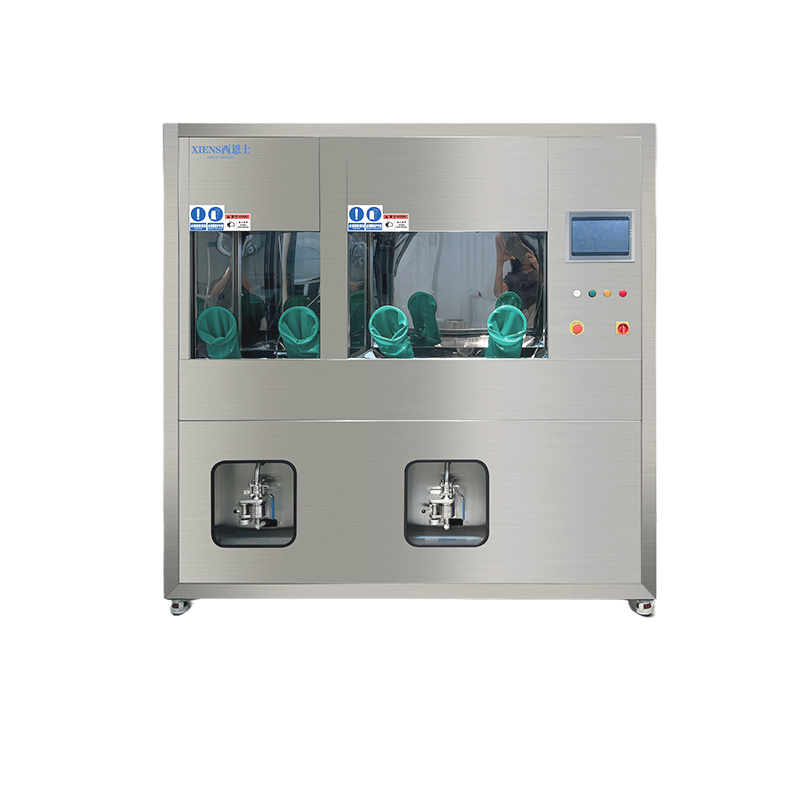
CLS-S Double Chamber Cleanliness Cabinet 600 integrates spray cleaning, perfusion flushing, side wall spray self-cleaning, ultrasound cleaning, membrane sample preparation (particle extraction), online filtration and recovery of cleaning agents, and circulating fine filtration into one. The wet extraction system, the most commonly used extraction method, covers a large portion of the requirements for particle extraction from components.
Read More


 IPv6 network supported
Leave A Message
Scan to Wechat/Whatsapp :
 English
 Français
 Русский
 Español
 Português
 عربي
عربي Get A Quote