Leave A Message
If you are interested in our products and want to know more details,please leave a message here,we will reply you as soon as we can.

Technical Cleanliness Laboratory Standards: A Complete Guide to Setup and Operation
Driven by the rapid advancement of advanced manufacturing, liquid cooling systems and precision machinery, controlling micron-scale solid particle contamination on components has become critical to product reliability and service life. As a key link in quality control systems, technical cleanliness testing—and the standard design and operation of dedicated laboratories—is receiving paramount attention across the industry.
Based on international specifications and mainstream industrial standards, this article systematically outlines the engineering framework, environmental control requirements, and core operational principles for building a compliant technical cleanliness laboratory.
Standardization in technical cleanliness testing is fundamental to ensuring data repeatability, comparability, and authority. The global benchmark standards widely adopted in the automotive and high-end equipment sectors include:
VDA 19.1 serves as the foundational standard for component cleanliness testing. It specifies methods for contaminant extraction (e.g., pressure rinsing, internal flushing), membrane preparation, microscopic particle analysis, and gravimetric testing.
Technical Note:
VDA 19.1 explicitly cautions against ultrasonic extraction due to the risk of eroding component base materials and generating artificial debris. It is generally not recommended as a primary extraction method, and several OEMs strictly restrict its use.
VDA 19.2 focuses on assembly processes, regulating contamination control within production environments, packaging, and logistics.
Published by the International Organization for Standardization, ISO 16232 is the global standard for automotive cleanliness. While its methodology aligns closely with VDA 19.1, differences remain in particle size codes, blank limit definitions, and test procedures; therefore, test results cannot be mutually recognized without qualification. It is widely used across automotive supply chains, aerospace, and precision hydraulics.
Additionally, major automakers, EV powertrain (Three-Electric) manufacturers, and hydraulic component suppliers establish stricter enterprise specifications based on these general standards. These specify quantitative thresholds for maximum allowable particle size (Lmax), hard metallic particle counts, and total gravimetric contamination limits.
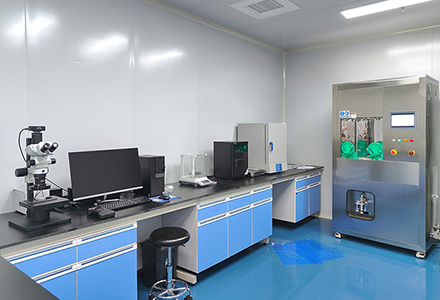
Preventing cross-contamination is the primary engineering goal when designing a technical cleanliness laboratory. The laboratory must guarantee that no external impurities enter the system during extraction, filtration, weighing, or microscopic analysis.
Important Clarification: Neither VDA 19.1 nor ISO 16232 mandatorily requires an entire laboratory facility to achieve a specific cleanroom classification. The zoning scheme below represents mainstream engineering practice. Alternatively, companies can utilize a standard laboratory environment paired with ISO Class 5 laminar flow clean benches or isolators to achieve localized contamination control.
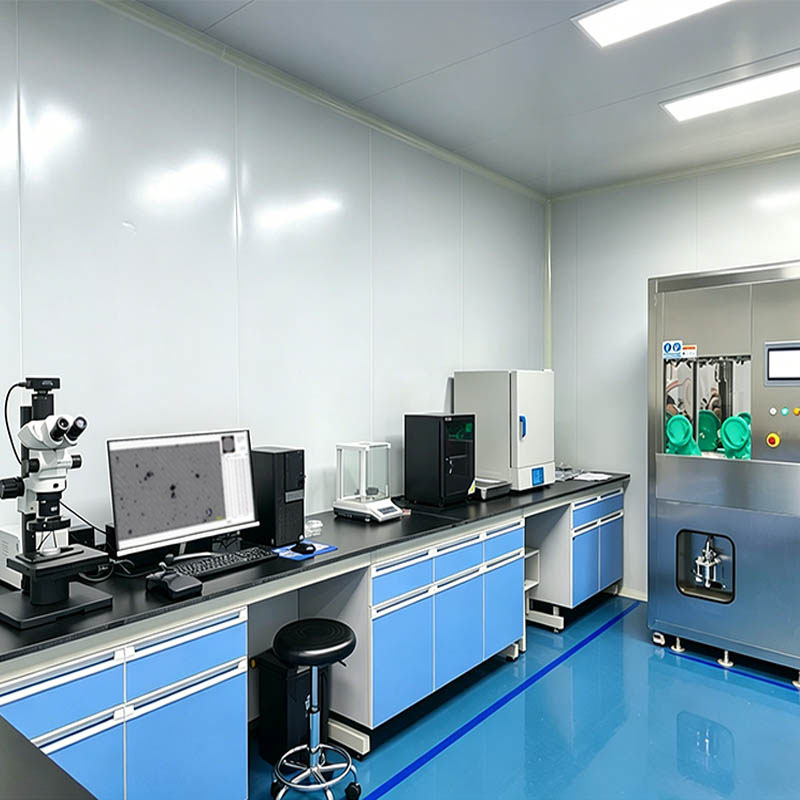
Basic Controlled Zone (Sample Receiving & Pre-treatment): Recommended to meet ISO 14644-1 ISO Class 8 (equivalent to Class 100,000 cleanroom).
Core Extraction & Particle Analysis Zone: Recommended to meet ISO 14644-1 ISO Class 7 (equivalent to Class 10,000 cleanroom).
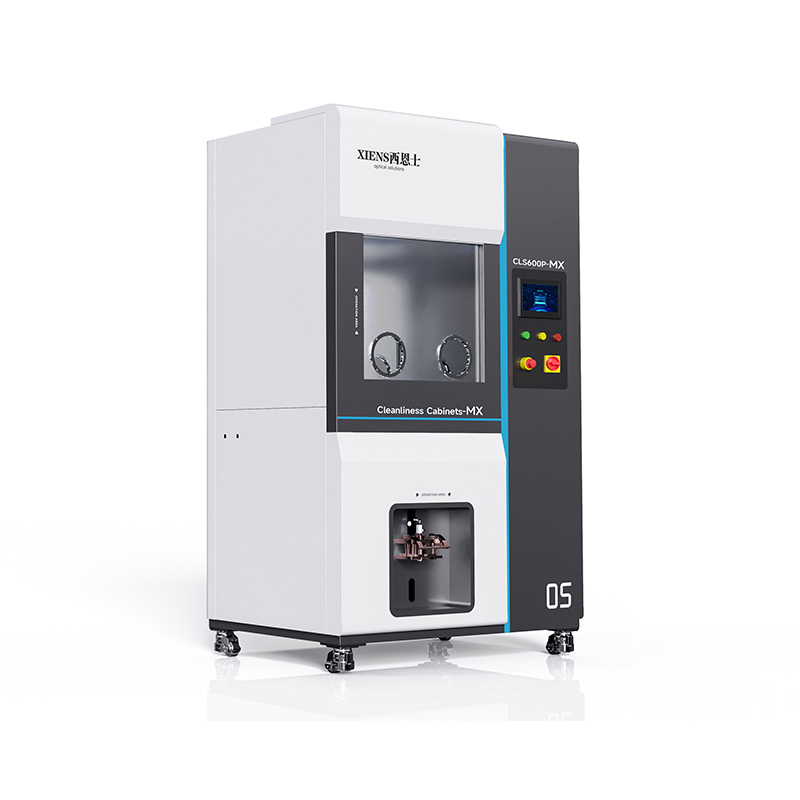
Localized High-Precision Workstations: For small precision components extraction and membrane handling, ISO Class 5 (Class 100) Fan Filter Units (FFU) should be deployed to create an ultra-clean micro-environment.
Laboratories must maintain a 24/7 continuous environmental monitoring system focusing on:
Differential Pressure Control: Maintain a positive differential pressure of +10 Pa to +15 Pa between clean areas and external non-controlled zones, using cascaded pressure gradients to prevent unfiltered air backflow.
Temperature & Humidity Control: Keep ambient temperature at 22±2℃ and relative humidity between 45% and 60% RH. This suppresses electrostatic attraction of particles and stabilizes microbalances. Direct airflow over the weighing balance must be eliminated.
Blank Value Management: The blank test is the ultimate metric for verifying the cleanliness of the environment, equipment, and reagents. Industry best practice targets a blank value within 10% of the sample requirement (with stringent OEM specifications demanding ≤5%).
3. Hardware Architecture and Closed-Loop Testing Workflow
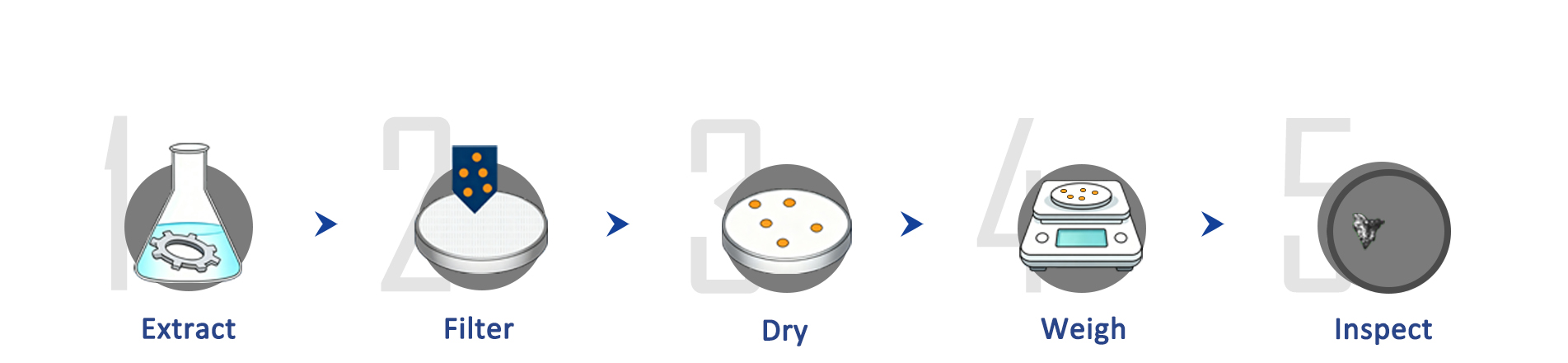
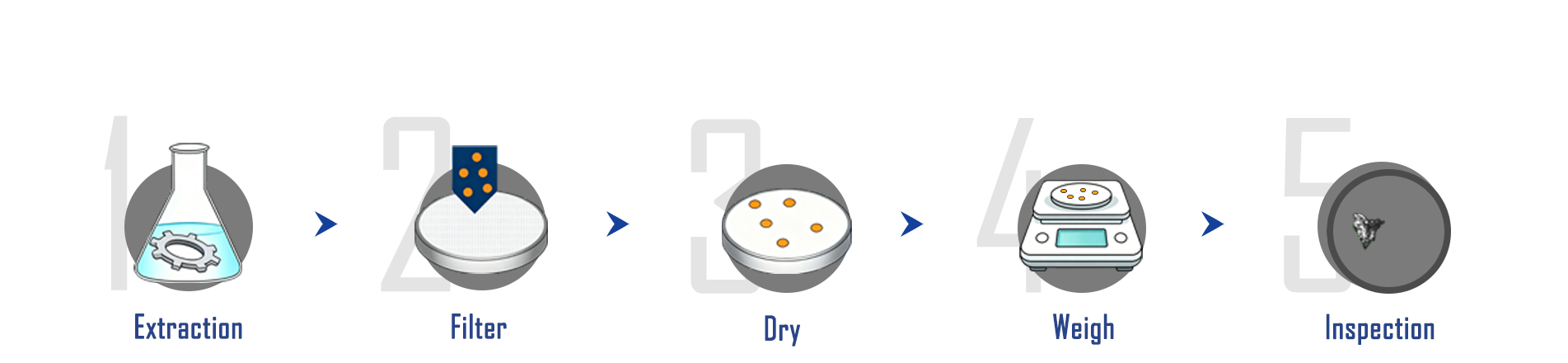
A Standardized technical cleanliness laboratory requires a complete,closed-loop hardware infrastructure:Extraction ➔Filtration➔ Membrane Conditioning➔ Gravimetric Analysis➔ Microscopic Inspection
Modular Technical Cleanliness Extraction Systems: Integrate pressure rinsing and internal flushing functions with dedicated closed-loop solvent filtration units (filtration rating 0.2μm) to minimize background fluid contamination.
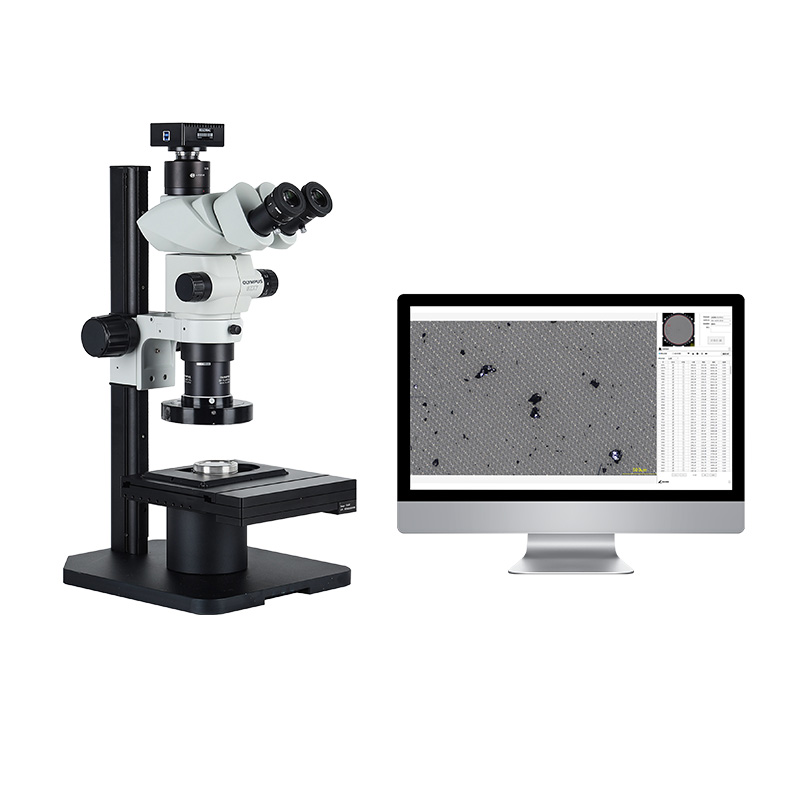
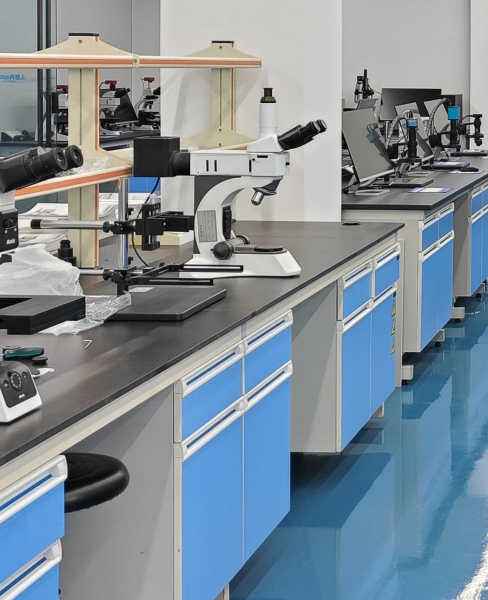
Automated Optical Particle Analysis Systems: Equipped with high-resolution automated scanning microscopes and specialized analysis software. The system automatically categorizes metallic reflective, non-metallic, and fiber contaminants, generating particle distribution data according to the VDA B–K size codes.
Micro & Ultra-Micro Balances: Standard gravimetric analysis requires microbalances with 0.01 mg resolution, while ultra-microbalances are used for high-precision demands. Weighing areas must feature draft shields, and membranes must undergo humidity stabilization prior to measurement to avoid moisture-induced mass errors.
Advanced hardware provides only the foundation; standardized Standard Operating Procedures (SOPs) ensure reliable, repeatable test data over time.
Personnel Protocols: Technicians must pass specialized training and qualification. Inside the core clean zone, operators must wear static-dissipative cleanroom suits and powder-free, low-extractable nitrile gloves. Fiber-shedding apparel is forbidden, and latex gloves are strictly prohibited.
Routine Blank Verification: Blank tests must be performed prior to daily operations and before/after each batch of samples. Sample test results are declared valid only when the blank value meets internal quality limits.
Solvent and Consumable Control: Extraction solvents (e.g., high-purity Isopropanol, refined hydrocarbon fluids) must pass incoming purity checks and micro-filtration before use. Membrane materials, pre-treatment steps, and storage procedures must be strictly standardized.
Enhanced Quality Assurance: Implement recovery rate validation procedures for extraction systems, enforce sealed sample transportation to prevent post-sampling contamination, and archive raw data and test membranes for full process traceability.
The construction and operation of a technical cleanliness laboratory is a systematic quality engineering initiative. As manufacturing transitions toward higher precision and complexity, establishing compliant, stable, and accurate cleanliness testing capability is not only an essential requirement for passing OEM audits, but also a strategic pillar for managing component failure risks and driving high-quality industrial growth.



 IPv6 network supported
Leave A Message
Scan to Wechat :

Scan to Whatsapp :

 English
 Français
 Русский
 Español
 Português
 عربي
عربي Get A Quote