Leave A Message
If you are interested in our products and want to know more details,please leave a message here,we will reply you as soon as we can.

In modern high-end manufacturing—including new energy vehicles (NEVs), liquid cooling systems, aerospace, precision hydraulics, and semiconductor fabrication—a single micron-sized metallic chip or fiber particle can trigger system lockups, electrical short circuits, or total equipment failure. Today, cleanliness testing has evolved from a basic routine check into a highly quantified, standardized, and critical quality control metric.
In industrial quality control, technical cleanliness refers to the quantitative evaluation and control level of residual contaminants—such as particulate matter, oils, grease, and fibers—on the surface of parts, components, or internal fluid systems.
Unlike household cleaning concepts, technical cleanliness focuses strictly on critical particles. Inspection methods generally measure two primary dimensions:
Gravimetric Method (Mass Method): Measures the total weight (mg) of residual particles per surface area or per individual component.
Particle Counting & Analysis Method: Analyzes particle size distribution, maximum particle length(μm),and particle material characteristics (e.g., hard metallic reflecting particles, non-metallic non-reflecting particles, and soft flexible fibers).
To ensure global supply chain compatibility, international organizations and industry bodies have established rigorous testing standards:
VDA 19.1 (German Automotive Industry Association): The most authoritative technical cleanliness inspection standard in the automotive sector, defining extraction procedures, rating codes, and report formats.
ISO 16232 (International Organization for Standardization): The global standard derived from VDA 19, specifically regulating road vehicle component technical cleanliness.
ISO 4406 / NAS 1638: International fluid power standards used to measure and classify particulate contamination levels in hydraulic fluids and lubricants.
GB/T 20082 / GB/T 3821: Chinese national standards governing contamination level determination for hydraulic components and general machinery.
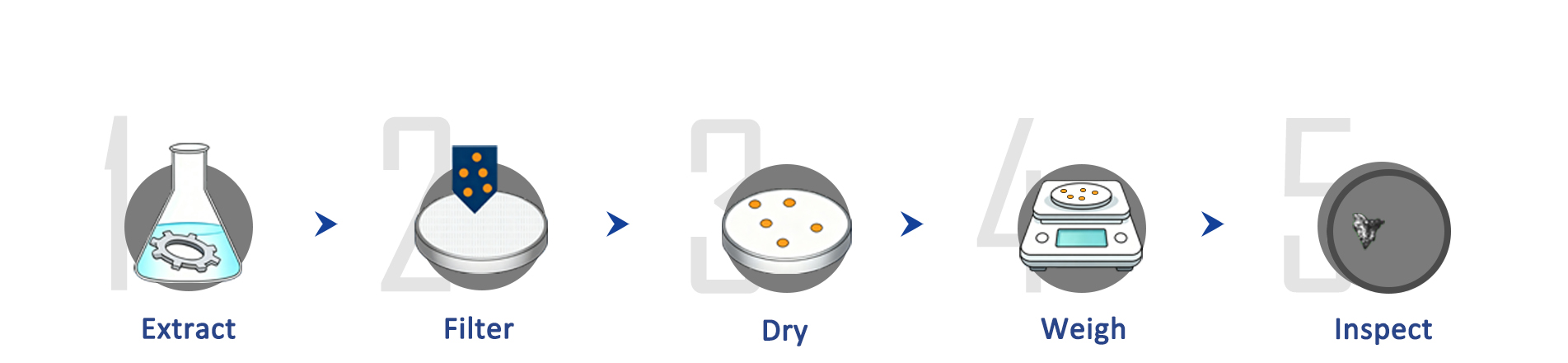
Both VDA 19.1 and ISO 16232 outline a four-step technical cleanliness inspection process:
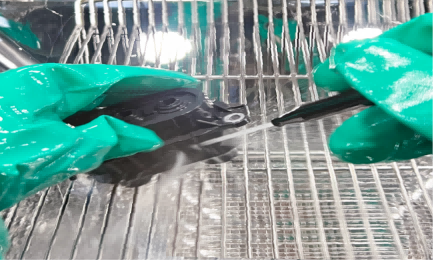
Particle Extraction: Residual contaminants are washed off part surfaces using standardized pressure rinsing, ultrasonic cleaning, internal flushing, or agitation techniques.
Membrane Filtration: The extraction fluid is vacuum-filtered through a specialized analysis membrane (typically 5 μm or 15μm pore size) to trap all particles.
Drying & Weighing (Gravimetric Method): The membrane is dried, and total contamination mass is weighed using a high-precision analytical balance.
Microscopic Analysis & Rating: Automated particle counting microscopes scan the membrane to measure maximum particle size, classify particle counts across size classes (e.g., Size Classes B through K), and identify metallic vs. non-metallic particles.
Standard Component Technical Cleanliness Code (CCC) Example:
CCC= A (C15-F00/G-H12/I-K0)
This code specifies the reference area or volume base (A) alongside allowed particle count limit classes (e.g.,F00, H12) across specific size ranges (15~25μm, 100~150μm, etc.).
To help enterprises build reliable quality assurance systems during R&D, in-process production, and final quality control (QC), we provide complete, turnkey technical cleanliness laboratory solutions and automated testing equipment:
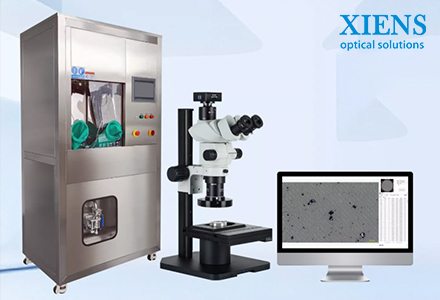
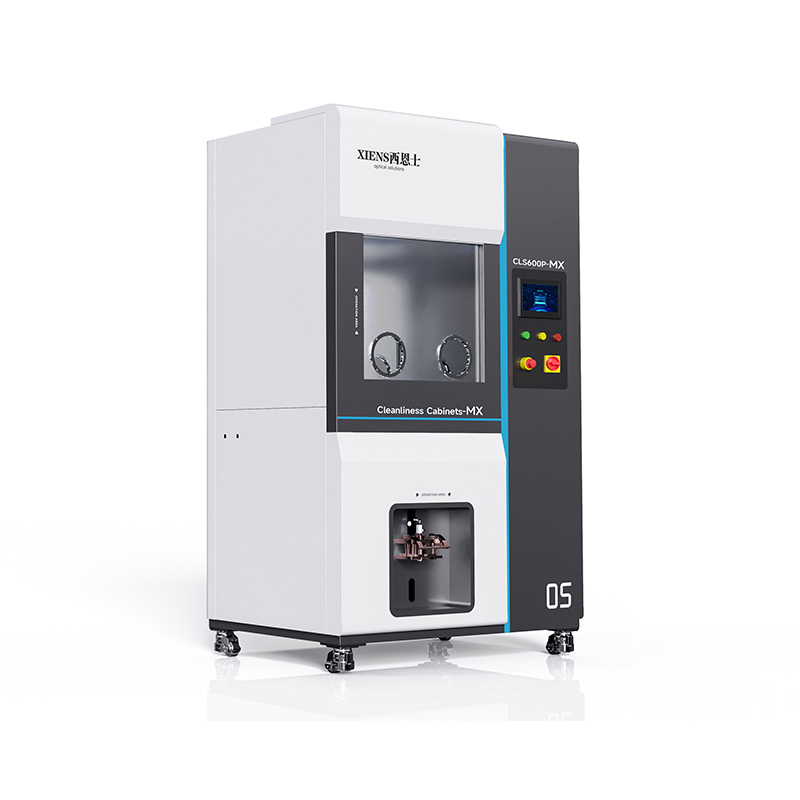
Designed in full compliance with VDA 19.1 and ISO 16232 standards, our automated technical cleanliness extraction equipment integrates state-of-the-art washing and sampling technologies:
Versatile Extraction Modes: Integrates high-pressure jet spraying, sidewall self-cleaning, internal flow flushing, ultrasonic extraction, membrane preparation, solvent inline filtration, and continuous purification in a single cabinet.
Real-time Online Filtration & Automatic Preparation: Rinsing fluid passes directly through an online filtration module during extraction, automatically collecting particles onto the membrane without manual transfer. Multi-stage fine filters ensure solvent cleanliness (blank value control).
PLC Smart Control & Operator Safety: Features programmable cleaning cycles, real-time status monitoring, and consumable replacement alerts. Constructed from high-grade 304 stainless steel with electric protective doors and solvent-resistant gloves for maximum operational safety.
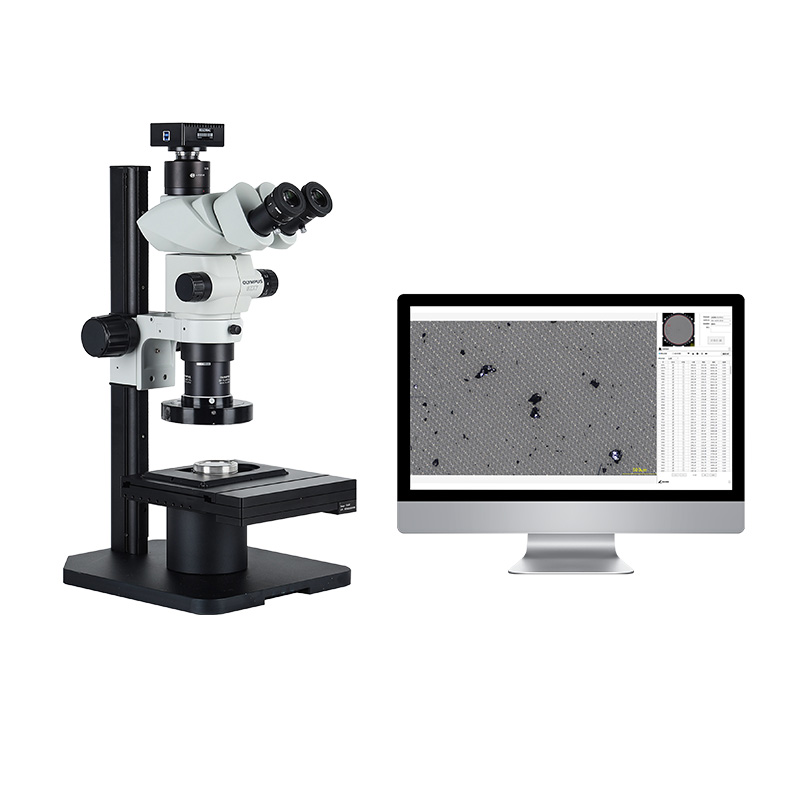
Serving as the central analysis unit for particle identification and rating, our automated microscopic imaging system fully complies with VDA 19.1, ISO 16232, ISO 4406, and NAS 1638:
Automated Scanning & Auto-Focusing: Equipped with a high-precision X/Y motorized stage and Z-axis auto-focus module, enabling one-click rapid membrane scanning and seamless stitching.
AI Partcle Classification & Polarized Optics: Utilizes optical polarization technology and intelligent algorithms to differentiate reflective metallic particles, non-reflective non-metallic particles, and flexible fibers in a single scan.
Multi-Standard Compliance & Auto-Rating: Automatically counts and classifies particles by size, instantly generating official Technical Cleanliness Codes (CCC).
Critical Particle Verification & One-Click Reporting: Allows rapid re-inspection of maximum critical particles under high magnification and exports bilingual (English/Chinese) standardized PDF reports for full data traceability.
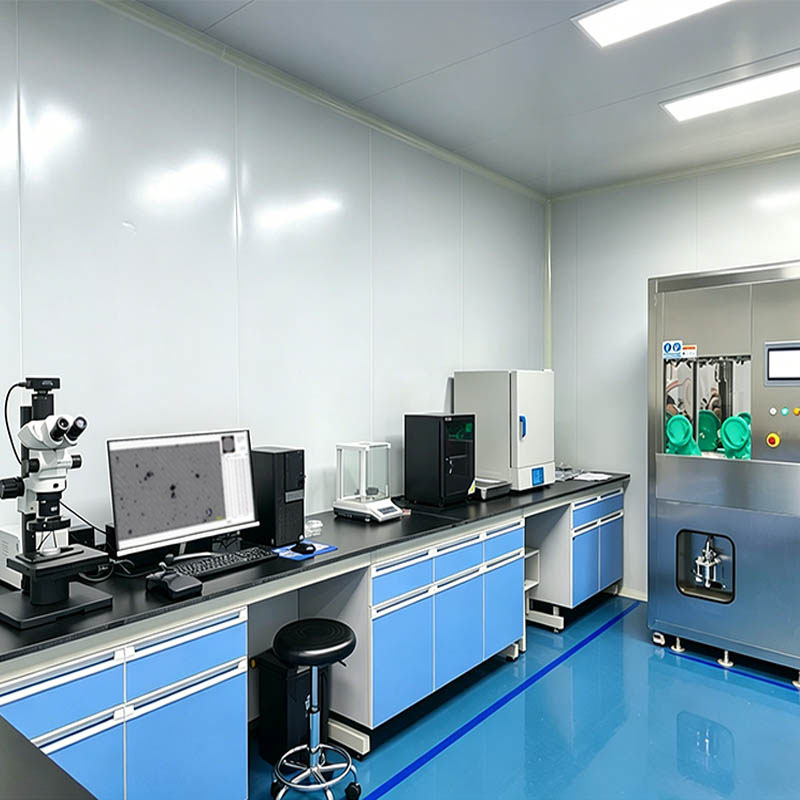
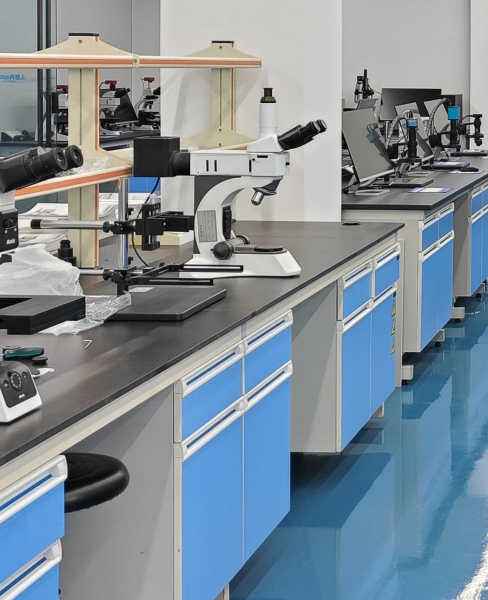
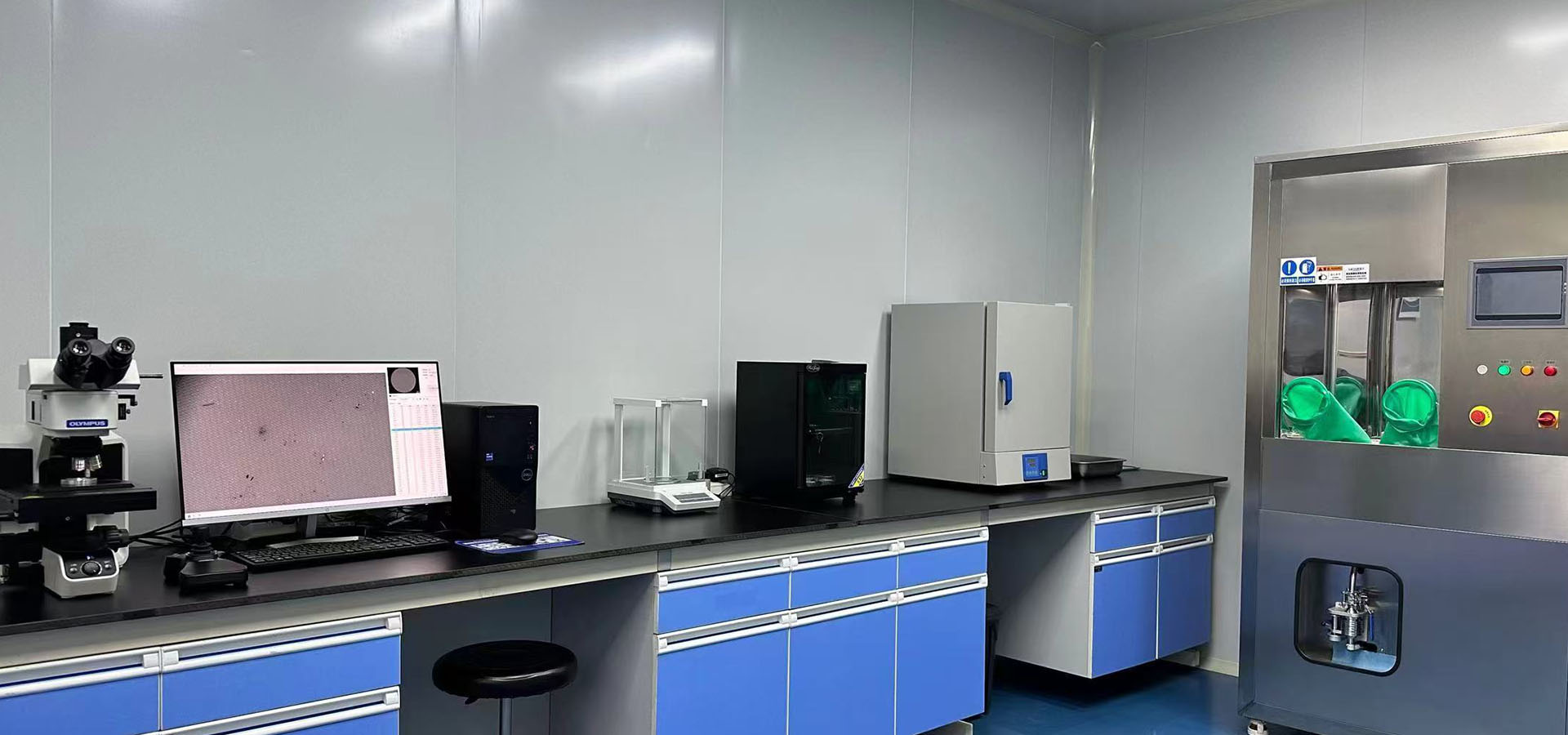
We provide complete technical cleanliness lab setups, including ISO Class 5/6 Laminar Flow Clean Benches, standardized chemical reagents, drying ovens, and micro-balances for gravimetric measurement.



 IPv6 network supported
Leave A Message
Scan to Wechat :
Scan to Whatsapp :

 English
 Français
 Русский
 Español
 Português
 عربي
عربي Get A Quote