Leave A Message
If you are interested in our products and want to know more details,please leave a message here,we will reply you as soon as we can.

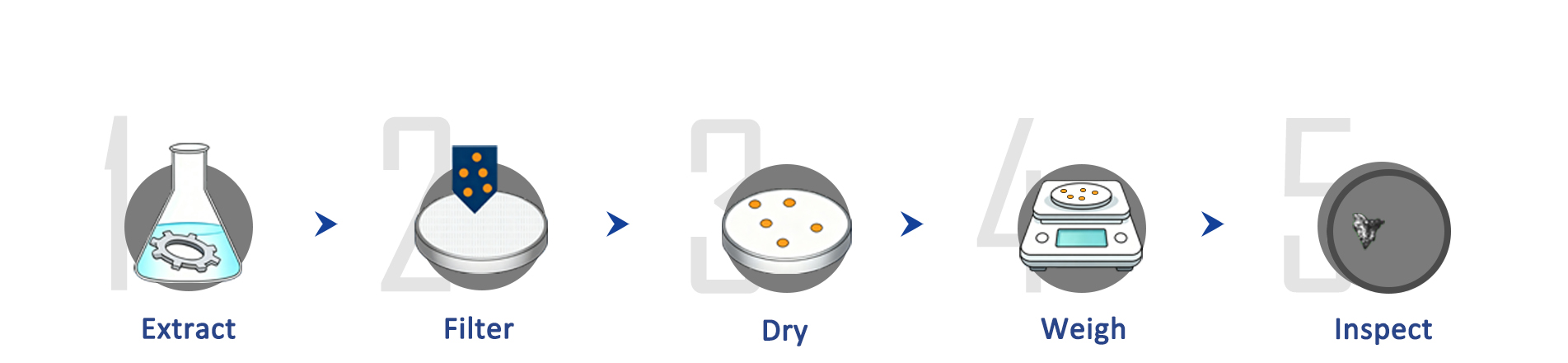
VDA 19.1 Technical Cleanliness Inspection Standard
VDA 19.1 is the authoritative standard for off-line technical cleanliness inspection of components, issued by VDA-QMC (Quality Management Center of the German Automotive Industry Association) and widely adopted across the global automotive supply chain. Its full title is Technical Cleanliness Inspection – Particulate Contamination of Functionally Relevant Automotive Components. The current effective version is the 3rd revised edition (Yellow Book), published in July 2025. Aligned with the international standard ISO 16232, VDA 19.1 establishes a unified inspection workflow for solid particulate contaminants to eliminate data discrepancies between OEMs and upstream/downstream suppliers. The standard solely regulates free, solid particulate contaminants to prevent functional failures such as valve spool jamming, moving-pair wear, and high-voltage component short circuits in new energy vehicles (NEVs). It serves as a core technical reference for component qualification and Production Part Approval Process (PPAP) approval for German OEMs and global tier suppliers. Driven by the automotive electrification transition, the latest edition expands capabilities for dry extraction, micro-particle detection, and standardized SEM-EDX analysis, meeting the stringent cleanliness control requirements of next-generation precision components including traction batteries, electronic control units (ECUs), and sensors.
VDA Volume 19 Part 1 (commonly abbreviated as VDA 19.1) was developed by the German Automotive Industry Association to standardize laboratory test methods for solid particulate contamination on the surface of functionally relevant automotive components. It is essential to distinguish between the two branches of the VDA 19 series:
VDA 19.1: Laboratory off-line cleanliness inspection method standard for finished components (detecting residual contaminants on parts).
VDA 19.2: Process cleanliness control specifications covering assembly site environments, personnel, and logistics.
These two standards serve completely different objectives and application scenarios and cannot be used interchangeably.
Core Objective: To establish a unified, reproducible, and comparable testing process that standardizes the entire operational chain—including particle extraction, filtration separation, and microscopic analysis. It explicitly defines particle size statistics rules (Feret diameter), blank value tests, and equipment quality control requirements, resolving long-standing industry challenges such as inconsistent test results across different laboratories and acceptance disputes between buyers and suppliers.
Scope of Contaminants: Regulates free solid particulate matter such as metallic chips, sand/silica, plastic powders, and fibers. Liquid or soluble media such as oil, grease, ionic contaminants, and volatile organic compounds (VOCs) fall outside the scope of this standard.
2. Core Technical Content
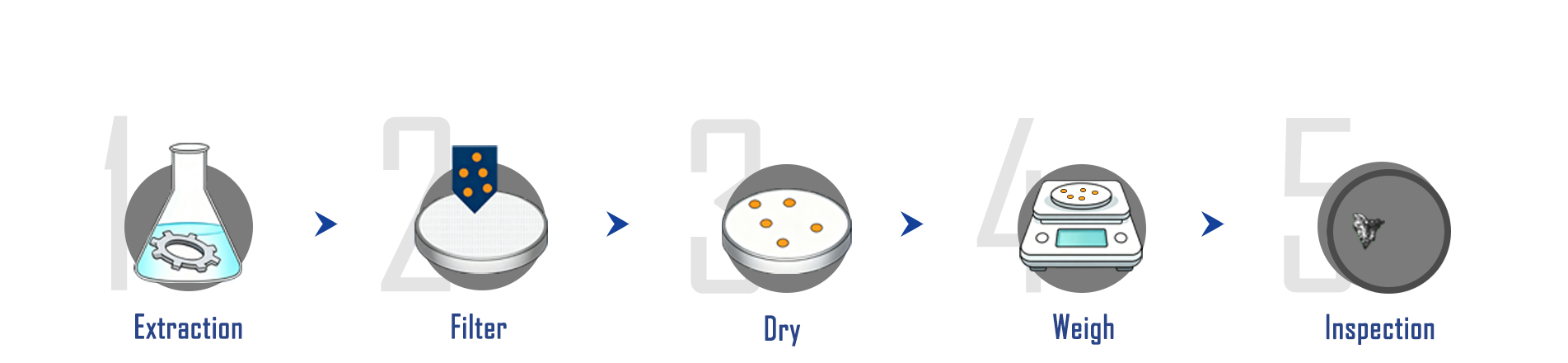
The complete inspection chain comprises three mandatory steps: Particle Extraction—Filtration & Retention —Membrane Analysis & Evaluation.
Extraction methods are divided into wet extraction (traditional mainstream) and dry extraction (formally integrated in the 3rd edition). The extraction method must be agreed upon in writing between buyer and supplier prior to testing; data obtained from different extraction methods cannot be directly compared.
Wet Extraction: Pressure rinsing, ultrasonic extraction, agitation/internal rinsing, and low-pressure rinsing (newly added in the 3rd edition). Suitable for housings, valve bodies, and oil passage components that can tolerate contact with liquid solvents.
Dry Extraction: Vacuum suction and stamp testing. Suitable for electronic components, composite materials, and precision parts sensitive to liquid immersion.
2.2 Particle Separation and Filtration
The extraction fluid passes entirely through an analysis membrane to capture particulate contaminants. Membranes with a pore size of 5μm are conventionally selected. A concurrent blank value test is mandatory to deduct background contamination introduced by solvents, containers, and test environments. The standard also specifies a maximum membrane load capacity (particle coverage area ≤3% ) to prevent counting inaccuracies caused by overlapping particles.
2.3.1 Standard Analysis (Default scheme; valid for buyer-supplier acceptance without requiring extra agreements)
Gravimetric Method: Measures the mass difference of the membrane before and after filtration to determine the total contaminant mass.
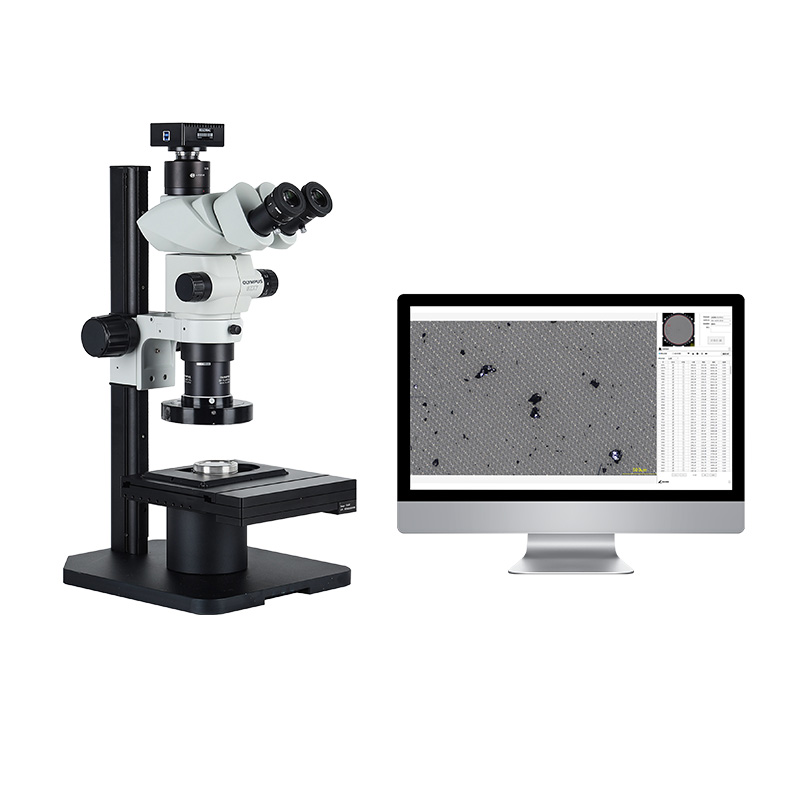
Optical Microscopy Analysis: Quantifies and counts particles 50μm , categorizing them into size classes while distinguishing metallic shiny particles, non-metallic particles, and fibers.
SEM-EDX Analysis: Standardized to enable automated particle counting and elemental/material identification, facilitating contamination root-cause analysis.
2.3.2 Flexible Analysis (Requires mutual agreement between buyer and supplier)
Designed for failure analysis and ultra-high precision components. Supports the detection of micro-particles <50μm and low-contrast transparent particles, primarily utilized for high-demand NEV components such as power electronics and sensors.
The Feret Diameter (Feret Max) is universally specified as the basis for particle size determination. Component cleanliness specifications must explicitly state: extraction method, membrane specifications, analytical techniques, sample size/quantity, and allowable limit values for particle counts and total mass.
VDA 19.1 is widely applied across the automotive supply chain for both internal combustion engine (ICE) vehicles and new energy vehicles (NEVs):
Powertrain & Chassis Systems: Engine blocks, transmission housings, hydraulic valve bodies, brake components, bearings, and oil pumps. Prevents mechanical wear, valve spool jamming, and fluid passage blockages caused by particulate contamination.
Core NEV Components: Battery liquid cooling plates, motor housings, electronic control unit (ECU) enclosures, high-voltage connectors, and sensors. Strictly limits conductive metallic debris to prevent insulation breakdown and internal short circuits.
Key Quality Milestones: Production Part Approval Process (PPAP), incoming quality control (IQC), routine production sampling, component failure analysis, and cleaning process validation.
Commercial Reference: Serves as a universal criterion in technical drawings, purchasing agreements, and third-party inspection reports. It is a mandatory entry requirement for global automotive supply chains, including OEMs and Tier-1 suppliers such as Volkswagen, BMW, Mercedes-Benz, ZF, and Bosch.
4.1 Standardized Dry Extraction Methods: Formally integrates vacuum suction and stamp testing into standard methods, while adding a low-pressure wet rinsing option to accommodate coated, thin-walled, or liquid-sensitive electronic components.
4.2 SEM-EDX Upgraded to Standard Analysis: Transitions SEM-EDX from an advanced failure-analysis tool into a routine inspection option, establishing standardized material classification criteria for early-stage contaminant tracing.
4.3 Refined Micro-Particle Inspection Protocols: Detailed equipment, membrane, and resolution requirements for particles < 50μm are defined to address the stringent cleanliness demands of high-voltage NEV electronics.
4.4 Established Dual-Track Framework: Establishes the distinction between Standard Analysis (ensuring data comparability across global laboratories) and Flexible Analysis (meeting customized needs for specialized components), minimizing disputes over scope and applicability.
4.5 Updated Fiber Evaluation Metric: Replaces simple fiber quantity counts with Total Fiber Length, aligning closer with the functional risk of line blockages in hydraulic and fluid hoses.
4.6 Tightened Quality Assurance Standards: Refines requirements regarding blank value limits, extraction efficiency validation (decay curves), measurement uncertainty, and equipment calibration intervals.
To ensure data validity, laboratories conducting VDA 19.1 cleanliness inspections must satisfy the following baseline criteria:
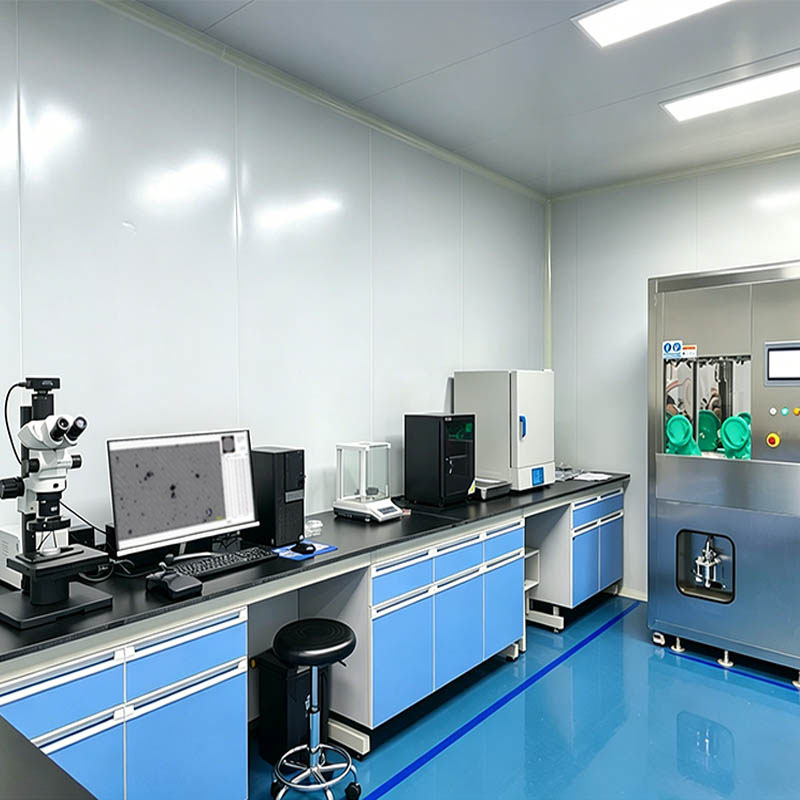
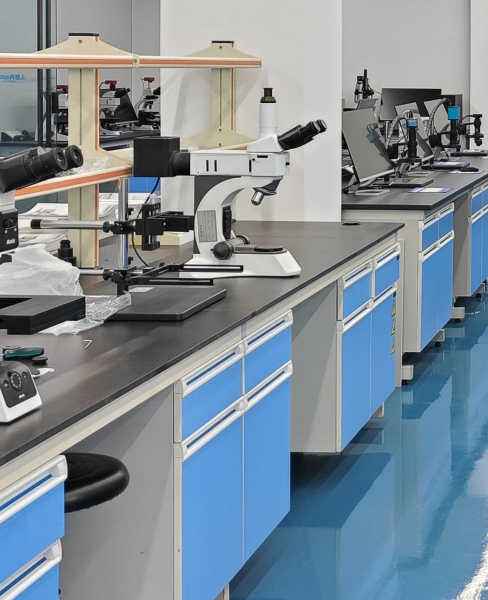
Environmental Control: Inspection areas should meet ISO 14644 Class 7 to Class 8 cleanroom standards and be physically isolated from dust-generating activities such as grinding or machining.
Personnel Protocol: Operators must wear lint-free cleanroom apparel and non-fiber gloves. Standard paper towels and cotton cloths are strictly prohibited.
Reagent & Equipment Preparation: Cleaning solvents and collection containers must be pre-purified. Regular blank tests are required to monitor background contamination continuously.
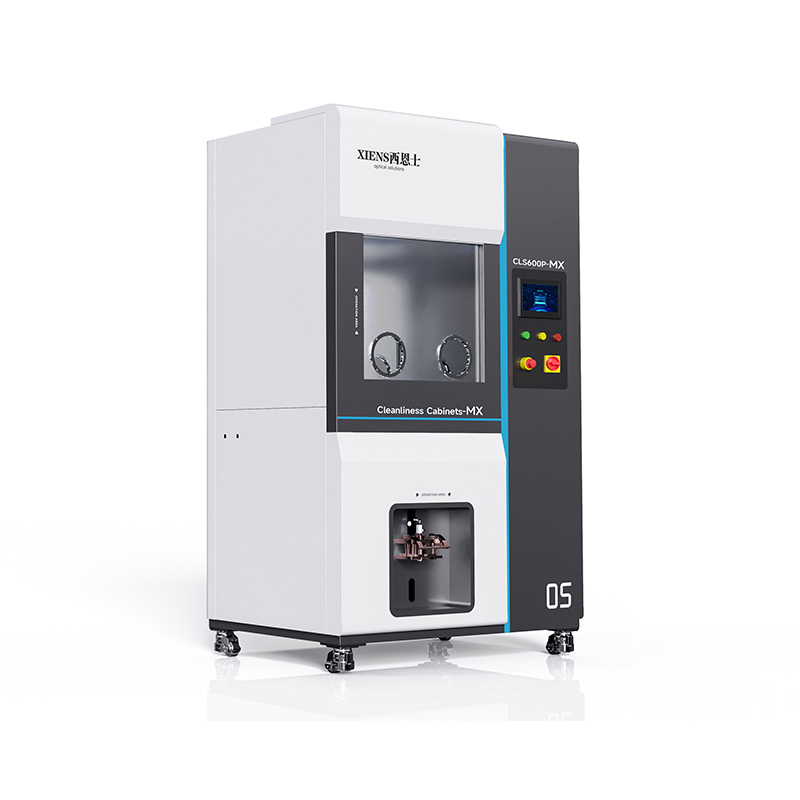
Hardware Requirements: Optical cleanliness microscopes, high-precision analytical balances (resolution of 0.01mg or 0.001mg for micro-masses), and compatible extraction systems (rinsing cabinets, ultrasonic baths, or dry suction apparatus). SEM-EDX systems are required if material analysis is conducted.
Traceability: Standard operating procedures (SOPs) must be maintained, alongside complete records of extraction parameters, membrane images, and raw counting data.
Amid the ongoing electrification and intelligence transformation of the automotive industry, the safety risks posed by micro-contaminants on components continue to escalate. The implementation of VDA 19.1 (3rd Edition) drives the industry's cleanliness management from traditional mechanical wear protection to high-voltage electrical safety and precision sensor reliability assurance. Implementing this standard enables enterprises not only to meet customer qualification mandates, but also to optimize cleaning processes and pinpoint production contamination sources through quantified particle analysis, systematically reducing the risks of component field failures and product recalls.
Answer: ISO 16232 is the international standard for component cleanliness in road vehicles, and its technical framework was originally derived from VDA 19.1. Both standards are highly compatible in terms of testing principles and core procedures. However, VDA 19.1 offers more detailed definitions for operational parameters.
Selection Guidance: For German OEMs and European automotive supply chain projects, VDA 19.1 is preferred. For global multi-region OEMs or non-European customers, ISO 16232 is commonly adopted.
Note: The exact standard version and inspection method must follow the explicit requirements stated in technical purchasing agreements or component drawings. Test data from the two standards cannot be directly converted or equated without validation.
Answer: No. Results obtained from different extraction methods cannot be directly compared or cross-evaluated for pass/fail compliance. Different extraction techniques exert varying degrees of mechanical force on internal cavities, blind holes, and strongly adhered particles.
VDA 19.1 explicitly mandates that a component's cleanliness specification must fix a single, validated extraction procedure. To evaluate the effectiveness of different cleaning processes, comparative testing must be conducted under identical extraction conditions. If the extraction method is modified, the allowable cleanliness limit values must be re-validated and mutually confirmed by both buyer and supplier.



 IPv6 network supported
Leave A Message
Scan to Wechat :

Scan to Whatsapp :

 English
 Français
 Русский
 Español
 Português
 عربي
عربي Get A Quote