50 μm System Blank Value in Liquid Cooling UQD Cleanliness Testing
Overview
In liquid cooling systems, cleanliness control of Quick Disconnect (UQD) connectors is essential for ensuring reliable fluid flow and protecting sensitive cooling components. During cleanliness testing, the system blank value is an important indicator of background particle contamination introduced by the testing environment, extraction equipment, fluids, and consumables. For liquid cooling UQD cleanliness analysis, a system blank value controlled at 50 μm provides a practical reference for evaluating background contamination and the reliability of particle counting results. XIENS' Liquid Cooling Cleanliness Analysis System uses a Class 100 clean laminar airflow environment to help maintain a low and stable system blank value, supporting cleanliness testing requirements for a wide range of liquid cooling UQD applications.
What Is a System Blank Value in Cleanliness Testing?
The system blank value (Blank Value) refers to the level of particles detected by a Technical Cleanliness Analysis System under defined test conditions without a test component being present. It represents the background particle contribution from the testing system itself, rather than contamination originating from the component under evaluation.
The system blank value can be influenced by several factors:
Environmental particles: Airborne dust, fibers, and other contaminants may enter the extraction area or settle on filter membranes if the testing environment is not adequately controlled.
Extraction fluid background: Particles already present in the extraction fluid may be counted as part of the test results.
Equipment residues: Residual particles in extraction lines, fixtures, and other equipment components may be released during subsequent tests, potentially causing cross-contamination.
Consumables: Filter membranes, containers, and other consumables with insufficient cleanliness may introduce additional background particles.
Controlling these contamination sources is essential for obtaining reliable particle cleanliness test results, particularly when analyzing components with strict cleanliness requirements.
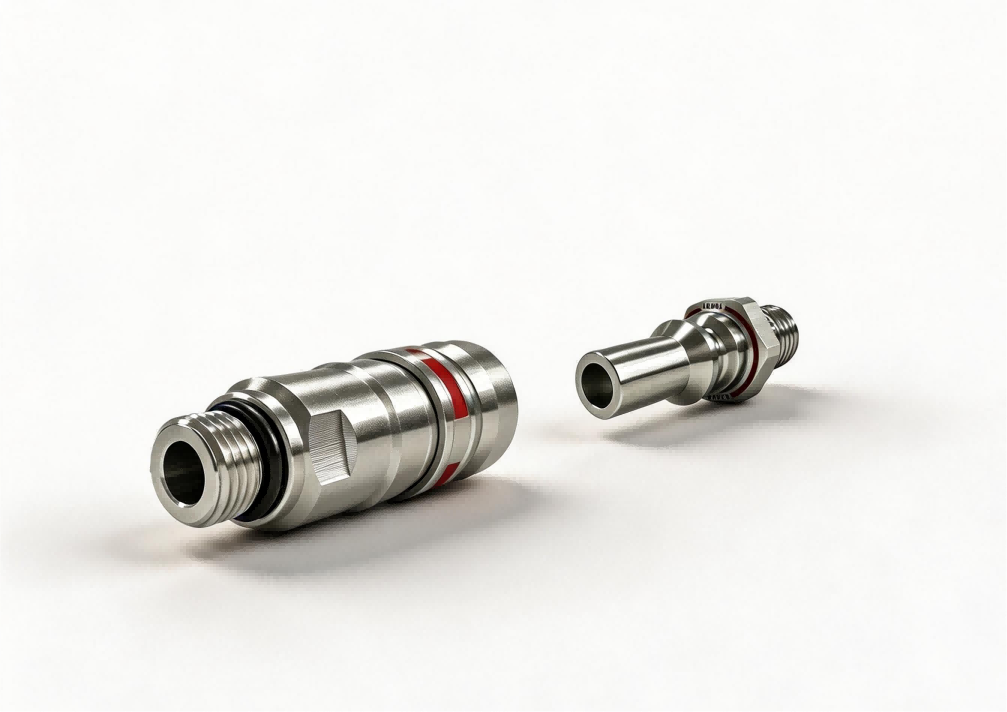
What Does a 50 μm System Blank Value Mean?
For liquid cooling cleanliness testing, UQD connectors are often subject to strict particle contamination limits, including requirements for particles within relatively small size ranges. For example, some customer specifications define maximum allowable particle counts within the 25–50 μm size range.
A system blank value controlled at 50 μm indicates that the background particle contribution is controlled at the 50 μm threshold under the specified blank test conditions. This provides a useful reference when evaluating particle counting results, especially for particles larger than 50 μm.
However, a 50 μm blank value does not automatically mean that all particles below 50 μm can be accurately quantified, or that measurements above 50 μm are completely free from background interference. The actual reliability of each particle size range should be evaluated based on the blank test results, particle counting method, background particle distribution, and applicable cleanliness acceptance criteria.
The following table illustrates the general relationship between different system blank levels and their potential impact on cleanliness testing:
| System Blank Level |
Impact on Particle Counting |
| Above 100 μm |
Background contamination may significantly affect particle counting, particularly in smaller particle size ranges. |
| ≤50 μm |
Provides better background control for particles above 50 μm; smaller particle ranges require additional evaluation against blank test results. |
| ≤25 μm |
Offers stricter background control and is more suitable for applications with demanding small-particle cleanliness requirements. |
XIENS' Liquid Cooling Cleanliness Analysis System incorporates a Class 100 clean laminar airflow environment to help maintain the system blank value at the 50 μm level. This provides a practical cleanliness testing solution for a wide range of liquid cooling UQD connector applications.
How Does the System Blank Value Affect UQD Cleanliness Testing?
The system blank value directly influences the reliability and consistency of UQD cleanliness testing. Its impact can be seen in several key areas.
1. Accuracy of Particle Counting Results
The primary objective of UQD cleanliness testing is to identify and quantify residual particles on component surfaces and inside fluid-contact areas.
When the system blank value is high, background particles may be counted together with particles extracted from the UQD connector. This can lead to artificially elevated particle counts and potentially result in false rejection of components or production batches that actually meet the required cleanliness specifications.
This issue is particularly important when testing highly clean components, where the actual particle count may be relatively low.
2. Reliability of Cleanliness Trend Analysis
In production environments, manufacturers often conduct regular or batch-based cleanliness inspections to monitor contamination levels and evaluate process stability.
If the system blank value fluctuates significantly between tests, background contamination may introduce additional measurement variation. This makes it difficult to determine whether changes in particle counts are caused by actual manufacturing process variations or inconsistencies in the testing system.
A low and stable system blank value helps improve the consistency of cleanliness data and supports more reliable long-term process monitoring.
3. Customer Audits and Compliance with Cleanliness Standards
Automotive and industrial cleanliness testing commonly follows established methodologies such as VDA 19.1 and ISO 16232.
System blank testing is an important part of contamination control and measurement quality assurance. Blank test results and relevant background information should be documented and evaluated as required by the applicable testing procedure and reporting requirements.
Excessive background particle contamination may raise questions about the reliability of the extraction and analysis process, potentially affecting customer acceptance and audit confidence.
4. Comparability of Supplier Cleanliness Data
Liquid cooling manufacturers often need to evaluate cleanliness data from different component suppliers.
If suppliers use testing systems with significantly different background contamination levels, their particle counting results may not be directly comparable, particularly when evaluating low particle counts or small particle size ranges.
Consistent blank testing procedures and controlled background contamination are therefore important for improving data comparability across suppliers and production facilities.
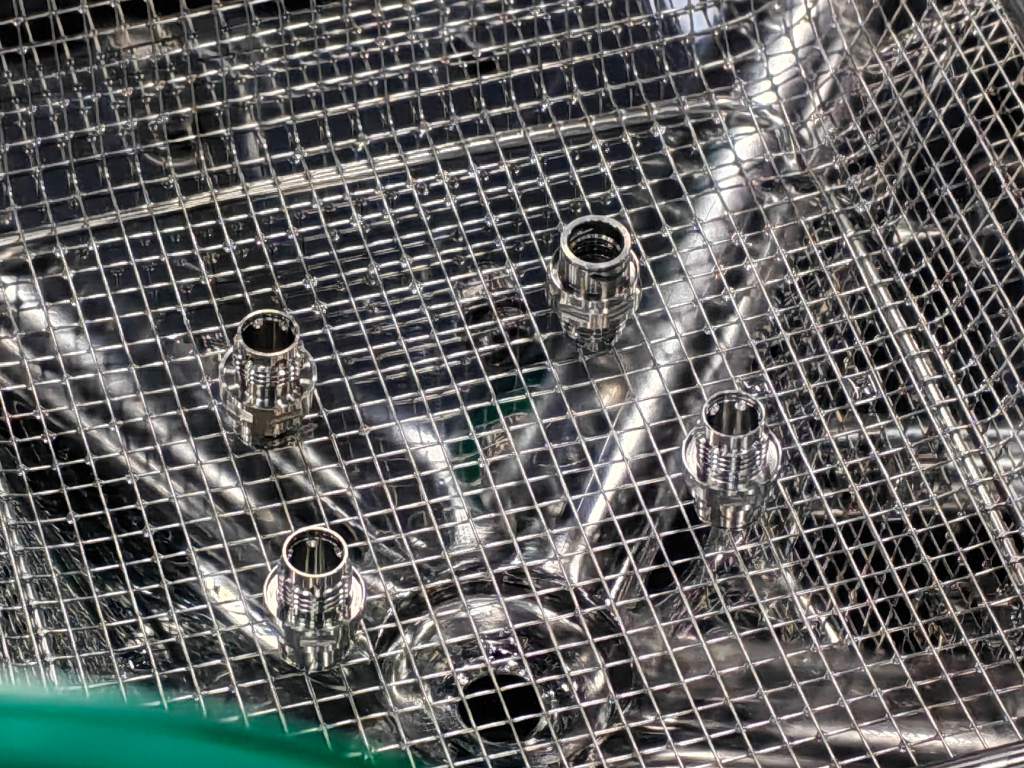
How to Control the System Blank Value in Liquid Cooling Cleanliness Testing
Maintaining a low system blank value requires coordinated control of the testing environment, extraction fluid, equipment, and consumables.
Environmental Control
The cleanliness testing area should be protected from external dust and airborne particles. A clean laminar airflow system helps establish a controlled testing environment by directing filtered air through the working area and reducing the introduction of environmental contaminants.
XIENS' Liquid Cooling Cleanliness Analysis System is equipped with a Class 100 clean laminar airflow environment to help minimize external particle contamination during testing.
Extraction Fluid Management
The extraction fluid should have a sufficiently low background particle level. Appropriate filtration and blank verification before testing help ensure that particles originating from the fluid itself do not significantly affect the results.
Equipment Cleaning and Maintenance
Extraction lines, fixtures, connectors, and other components in contact with the extraction fluid should be cleaned regularly. Proper cleaning between tests helps prevent residual particles from previous samples from entering subsequent measurements.
Consumables Quality Control
Filter membranes, extraction containers, and other consumables should meet the required cleanliness specifications. Blank verification of consumables, where applicable, helps identify potential contamination before they are used in actual testing.
Balancing Extraction Efficiency and System Blank Control
A low system blank value alone does not guarantee reliable cleanliness testing. Extraction efficiency is equally important.
Even if the background particle level is extremely low, an inadequate extraction method may fail to remove particles from the UQD connector surface, internal passages, and other fluid-contact areas. In this case, the measured particle count may underestimate the actual contamination level.
Conversely, even a highly efficient extraction process cannot guarantee reliable results if the system blank value is poorly controlled. Background particles may be counted together with the extracted contaminants, leading to inaccurate results.
Therefore, extraction efficiency and system blank control must be optimized together. A reliable liquid cooling cleanliness analysis system should provide both effective particle extraction and a controlled testing environment to ensure that the measured results accurately represent the cleanliness condition of the tested components.
Conclusion
Although the 50 μm system blank value may appear to be a relatively simple technical parameter, it plays an important role in evaluating the reliability of liquid cooling UQD cleanliness testing.
As liquid cooling systems continue to develop and cleanliness requirements become increasingly demanding, controlling background particle contamination is essential for obtaining trustworthy test data, supporting production quality control, and meeting customer cleanliness specifications.
From equipment selection to daily testing operations, system blank control should be considered an integral part of the entire cleanliness testing process. For manufacturers of liquid cooling components, understanding the technical significance of the system blank value and selecting a testing solution with stable background control can help improve measurement reliability, data consistency, and customer confidence.
FAQ
Q1: What is a system blank value in cleanliness testing?
A: The system blank value refers to the background particle level detected by a cleanliness testing system under defined test conditions without a test component. It reflects particles introduced by the testing environment, extraction fluid, equipment residues, and consumables. Monitoring the blank value helps evaluate the background contamination of the testing system before actual component testing.
Q2: What risks does a high system blank value pose to UQD cleanliness testing?
A: A high system blank value may affect UQD cleanliness testing in several ways:
Inaccurate particle counting: Background particles may be counted together with actual component contaminants, potentially causing false rejection of otherwise acceptable components.
Unreliable trend analysis: Fluctuating blank values introduce measurement variation, making it difficult to distinguish manufacturing process changes from testing system deviations.
Reduced audit confidence: Poorly controlled background contamination may raise concerns about the reliability of test results and the effectiveness of the testing procedure.
Limited supplier data comparability: Differences in background contamination levels between testing systems may affect the comparability of cleanliness data, particularly for small particle size ranges.
Q3: Does a lower system blank value always mean more reliable cleanliness testing?
A: No. A low system blank value is important, but it does not guarantee reliable cleanliness results on its own. System blank control and extraction efficiency must be evaluated together. If the extraction method cannot effectively remove residual particles from the UQD connector, even an extremely low blank value cannot ensure that the measured results represent the component's actual cleanliness condition. Similarly, high extraction efficiency cannot compensate for excessive background contamination. Both parameters are essential for reliable UQD cleanliness analysis.
Please contact us for further inquiries or detailed information!
Tel:+86-13400008098
Email:sales@xiens.com
Web:www.xiens.com

 English
 Français
 Русский
 Español
 Português
 عربي
 Get A Quote





 IPv6 network supported