Why Technical Cleanliness Is Non-Negotiable for Global Precision Component Supply Chains | ISO 16232 & VDA 19.1
Overview
As tolerance levels shrink for new energy vehicles, thermal management systems, hydraulic valves and precision fluid components, technical cleanliness has evolved from an optional test item into a non-negotiable baseline for OEM and Tier 1 supplier qualification. Manufacturers without robust particulate contamination control systems face rising risks of field failures, costly claims and lost export orders.
A common misconception across the manufacturing sector is that technical cleanliness means “visually clean parts free of oil or dirt”. In accordance with ISO 16232 and VDA 19.1, technical cleanliness is the quantitative and qualitative control of micron-scale solid particles trapped on functional surfaces and internal cavities. Testing records particle size distribution, particle count and material identification to isolate harmful contaminants such as metal chips, abrasive grit, fibres and welding slag. The core objective is to contain particulate risks below agreed failure thresholds.
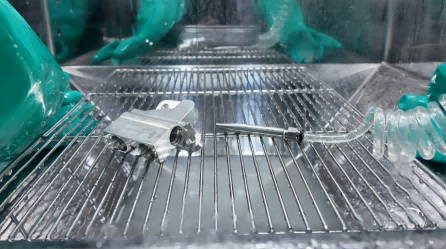
How Microscopic Particles Affect Precision Component Reliability
Industry data shows that more than 80% of early-life failures in fluid circuits, high-voltage electrical assemblies, injectors and hydraulic valve blocks stem from unseen micro-contamination. Tiny metallic particles can jam spools, scratch sealing surfaces and trigger premature bearing wear. Conductive particulates may cause arcing and insulation breakdown in high-voltage systems. Hard debris can block cooling channels and escalate thermal runaway hazards in battery systems. These hidden defects cannot be detected by conventional dimensional checks, NDT or visual inspection.
ISO 16232 and VDA 19.1: From Testing to Lifecycle Contamination Control
The latest revision of VDA 19.1 de-emphasizes reliance on final sample testing and requires full-lifecycle contamination management across machining, cleaning, handling, clean assembly and sealed packaging. This direction is also feeding into ongoing ISO 16232 updates, aiming to align extraction protocols, particle classification and laboratory reporting for global cross-border supply chains.
Technical Cleanliness Requirements for Global Supplier Qualification
Many exporters face audit hold-ups when cooperating with customers in Europe, North America and Southeast Asia: missing cleanliness specifications on drawings, unvalidated cleaning processes, incomplete filter membrane archives and lack of particle traceability. Missing technical cleanliness documentation can directly result in failed system audits and blocked new project approvals.
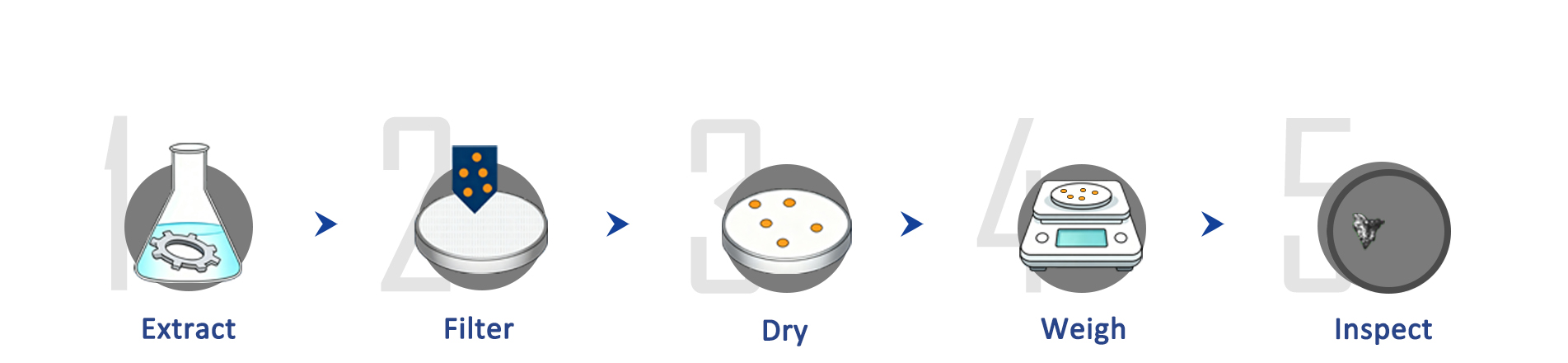
A compliant technical cleanliness management system covers five core stages:
1. Define cleanliness limits and extraction methods (pressure rinsing / ultrasonic extraction) based on customer specifications
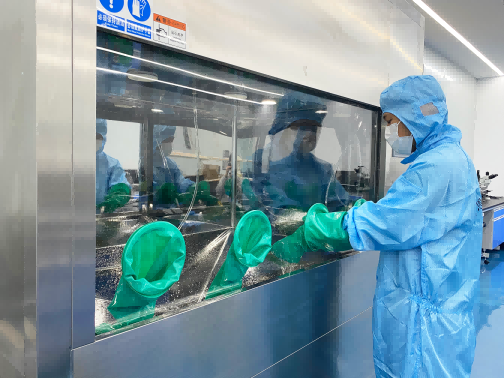
2. Implement segregated clean zones to stop secondary contamination from cutting fluids, tooling and packaging
3. Validate cleaning recipes, locking in parameters such as media type, pressure, temperature and cycle time
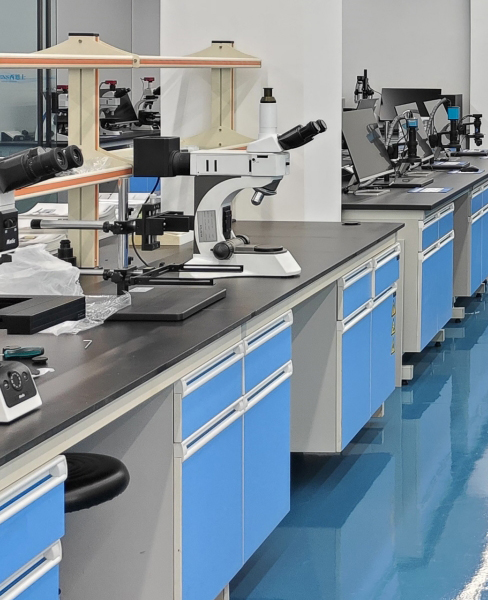
4. Laboratory analysis: filter membrane preparation, gravimetric measurement, microscopic imaging and particle classification
5. Secure long-term storage of raw data, images and test reports for traceability during second-party audits
Buyers from automotive, energy storage and hydraulic industries are paying growing attention to component cleanliness. Factories that can consistently deliver auditable cleanliness reports stand out in supplier selection.
Quality specialists note that investing in technical cleanliness control raises short-term costs for cleaning equipment, lab infrastructure and clean-area management. The long-term return is substantial: fewer field failures, less rework, reduced liability risk and access to high-tier global supply chains. For precision manufacturers targeting export markets, standardized technical cleanliness is no longer a competitive bonus — it is an entry ticket.
FAQ
Q1: What is the difference between ISO 16232 and VDA 19.1?
A1: VDA 19.1 is widely specified for German automotive OEMs and European vehicle supply chains. ISO 16232 serves as the global cross-industry standard. Test methods overlap, but limits and acceptance rules must follow the customer’s technical agreement; results are not automatically interchangeable.
Q2: Can visual inspection replace technical cleanliness testing?
A2: No. The human eye generally cannot detect particles smaller than 50 μm. Most failure-critical contaminants fall within the 5–20 μm range and require filter extraction and microscopic evaluation.
Q3: Which process stages carry the highest cleanliness risk?
A3: Machining debris residue, recontamination after cleaning and particle ingress during handling & packaging are the top risk points. Final testing only acts as verification.
Please contact us for further inquiries or detailed information!
Tel:+86-13400008098
Email:sales@xiens.com
Web:www.xiens.com

 English
 Français
 Русский
 Español
 Português
 عربي
 Get A Quote




 IPv6 network supported