UQD Cleanliness Report Generation Under VDA 19.1 and ISO 16232 Standards
In 2026, the global liquid cooling industry continues to expand rapidly. NVIDIA's DSX Ready certification program incorporates liquid cooling infrastructure into the qualification framework for AI factories, while CoreWeave has launched the world's first fully liquid-cooled, multi-rack Vera Rubin NVL72 cluster. Against this backdrop, standardized cleanliness inspection reports for liquid cooling components are becoming increasingly important for ensuring consistent quality evaluation and facilitating quality recognition across companies and international supply chains.
As two influential standards in the field of technical cleanliness testing, VDA 19.1 and ISO 16232 provide established methodologies and reporting frameworks for UQD cleanliness testing in liquid cooling systems.
Overview of VDA 19.1 and ISO 16232 Standards
VDA 19.1, officially known as Inspection of Technical Cleanliness – Particulate Contamination of Functionally Relevant Automotive Components, was published by the German Association of the Automotive Industry (VDA). It was originally developed for cleanliness inspection in the automotive components industry. With the growing adoption of liquid cooling technology in data centers, its testing methods have also been widely applied to the cleanliness evaluation of liquid cooling components.
The key aspects of VDA 19.1 include extraction methods, particle analysis procedures, reporting requirements, and cleanliness evaluation criteria.
ISO 16232, titled Road Vehicles – Cleanliness of Components of Fluid Circuits, was published by the International Organization for Standardization (ISO). It shares fundamental testing principles with VDA 19.1, although certain details differ, particularly in particle characterization, coding systems, and reporting formats.
Comparison Between VDA 19.1 and ISO 16232
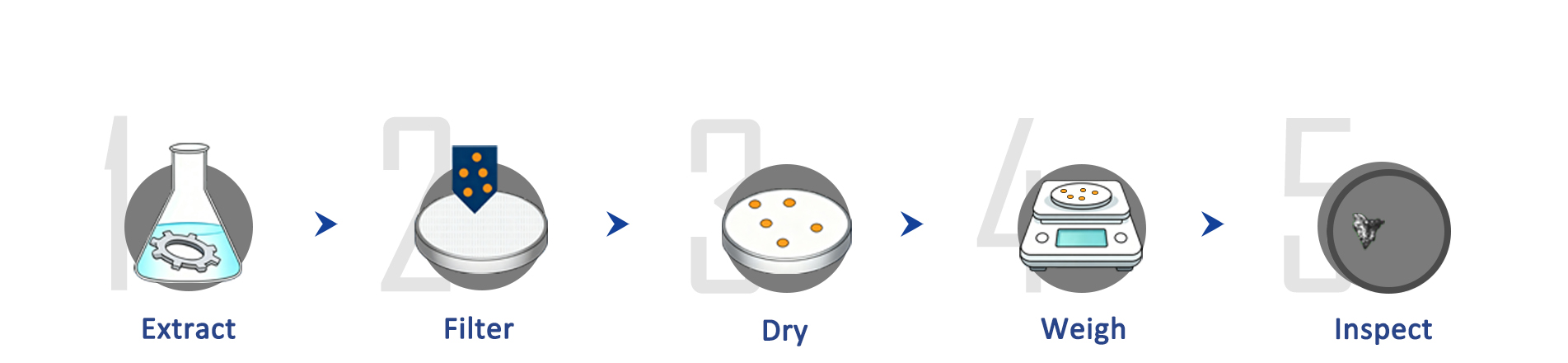
Although the two standards differ in certain reporting details, their fundamental cleanliness testing procedures follow the same general workflow:
Extraction → Filtration → Analysis → Reporting
The main differences lie in how test results are presented and how particle characteristics and classifications are documented.
| Comparison Criteria |
VDA 19.1 |
ISO 16232 |
| Publishing Organization |
German Association of the Automotive Industry (VDA) |
International Organization for Standardization (ISO) |
| Original Application |
Automotive components |
Road vehicle components |
| Extraction Methods |
Pressure rinsing, ultrasonic cleaning, flushing, etc. |
Pressure rinsing, ultrasonic cleaning, flushing, etc. |
| Particle Characterization |
Gravimetric analysis + particle counting |
Gravimetric analysis + particle counting + coding system |
| Reporting Format |
Standardized report template |
Standardized report template (with some format differences) |
| Adoption in the Liquid Cooling Industry |
Relatively high (preferred by many European customers) |
Relatively high (preferred by international customers) |
Key Contents of a UQD Cleanliness Inspection Report
Whether testing is conducted according to VDA 19.1 or ISO 16232, a UQD cleanliness inspection report for liquid cooling components generally includes the following information:
1. Basic Sample Information
The basic information should identify the tested component and inspection conditions, including component name, model, batch number, inspection date, testing equipment model, and calibration status.
2. Extraction Parameters
This section documents the extraction procedure and relevant operating conditions, such as the extraction method (e.g., pressure rinsing), extraction fluid type, flow rate, pressure, rinsing duration, and number of extraction cycles.
3. Particle Analysis Results
Particle analysis is one of the most important sections of a cleanliness inspection report. Typical results include:
Total particle count, classified by particle size ranges
Particle mass, including total mass and mass within different particle size ranges
Maximum particle size and morphological characteristics
Particle classification statistics, including metallic particles, non-metallic particles, and fibers
4. Conformity Assessment
The measured cleanliness results are compared with the cleanliness limits specified by the customer or applicable technical requirements. The report then provides a conformity assessment indicating whether the tested component meets the specified cleanliness criteria.
5. Supporting Information and Attachments
Additional documentation may include filter membrane images, magnified images of representative particles, and system blank test records to support result verification and traceability.
Automated UQD Cleanliness Report Generation
The automation capabilities of a liquid cooling cleanliness analysis system directly affect inspection efficiency, data consistency, and reporting accuracy.
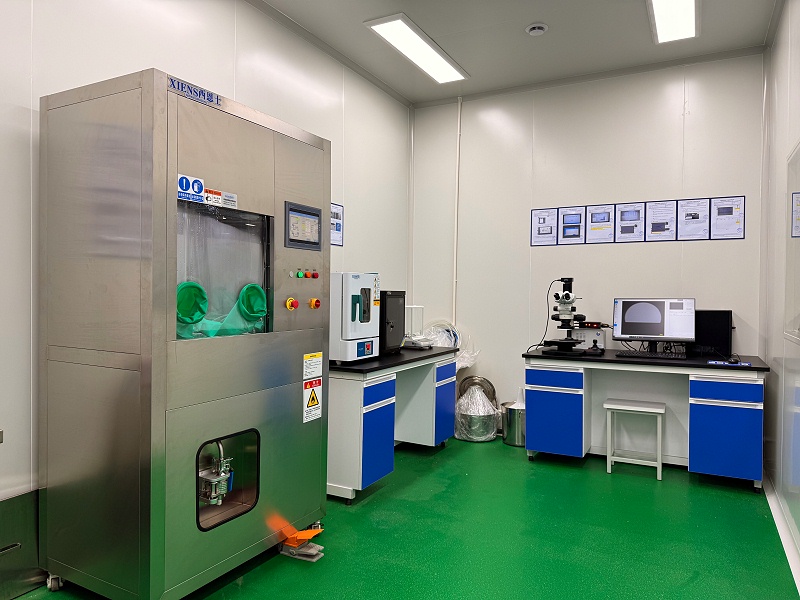
XIENS' liquid cooling cleanliness testing instrument provides several features designed to simplify cleanliness report generation and support standardized inspection workflows.
One-Click Report Generation
After testing is completed, the system automatically generates cleanliness inspection reports based on VDA 19.1 or ISO 16232 reporting requirements. Reports can be exported in PDF, Word, and Excel formats, eliminating the need for operators to manually compile report templates.
Complete Data Integration
Each data item in the report comes from automatically recorded inspection information, including extraction parameters, particle counting results, particle statistics, and filter membrane images. This helps reduce errors caused by manual data entry and improves the consistency of inspection records.
Customizable Report Templates
For customers with specific reporting requirements, report templates can be adjusted within the applicable standard framework. Customization options include adding customer logos, specific data fields, and customized evaluation criteria.
Data Traceability
Each inspection report is linked to a unique test identification number. Through the instrument's data management system, users can retrieve the corresponding original inspection data and particle images whenever required, supporting quality tracking and subsequent verification.
The Role of Standardized Cleanliness Reports in Supply Chain Management
Across the liquid cooling supply chain, standardized cleanliness inspection reports play an important role in supplier qualification, incoming quality control, and product quality traceability.
Supplier Qualification
When selecting liquid cooling component suppliers, manufacturers may require cleanliness inspection reports prepared according to VDA19.1 or ISO16232. The completeness and consistency of these reports can directly influence supplier evaluation and qualification processes.
Incoming Quality Inspection
Standardized cleanliness reports allow receiving companies to review and verify the cleanliness performance of incoming components against specified requirements. This helps streamline incoming inspection and supports more efficient quality acceptance procedures.
Quality Traceability
When cleanliness-related problems occur during liquid cooling system operation, standardized inspection reports can help identify potential contamination sources. For example, they can support investigations into whether excessive residual particles originate from UQD connectors themselves or from other components, such as pipelines, cold plates, and manifolds.
By adopting standardized technical cleanliness procedures and automated reporting solutions, manufacturers can improve inspection efficiency, strengthen quality traceability, and support consistent cleanliness control throughout the liquid cooling supply chain.
FAQ
1. What is the difference between VDA 19.1 and ISO 16232 for UQD cleanliness testing?
VDA 19.1 and ISO 16232 provide standardized methods for evaluating particulate contamination in components. Both cover key testing procedures, including contaminant extraction, filtration, particle analysis, and result documentation. However, they differ in certain technical details, particle characterization requirements, and reporting conventions. For UQD cleanliness testing, the applicable standard should be selected according to customer specifications, industry requirements, and the quality standards adopted by the manufacturer.
2. What information should be included in a UQD cleanliness inspection report?
A UQD cleanliness inspection report should typically include sample identification, extraction parameters, particle counting results, particle mass, maximum particle size, and particle classification. Supporting information, such as filter membrane images and representative particle images, can also help verify the results. These records allow manufacturers to evaluate particulate contamination, compare inspection results against specified cleanliness limits, and maintain quality traceability throughout the liquid cooling supply chain.
Please contact us for further inquiries or detailed information!
Tel:+86-13400008098
Email:sales@xiens.com
Web:www.xiens.com

 English
 Français
 Русский
 Español
 Português
 عربي
 Get A Quote




 IPv6 network supported