Global Liquid Cooling Industry Booms: Component Cleanliness Becomes Core International Supply Chain Threshold
Driven by the rapid expansion of high-density AI computing clusters and global data center energy efficiency upgrades, liquid cooling has fully replaced traditional air cooling as the standard heat dissipation solution for high-power servers worldwide. The global liquid cooling market is undergoing explosive growth in 2026, with hyperscale cloud infrastructure, new energy storage, and electric vehicle systems serving as the primary global demand drivers. Most importantly, technical cleanliness of thermal fluid components has transitioned from an optional quality check to a mandatory supply chain qualification standard, with VDA19.1 and ISO16232 now widely specified by international buyers and system integrators.
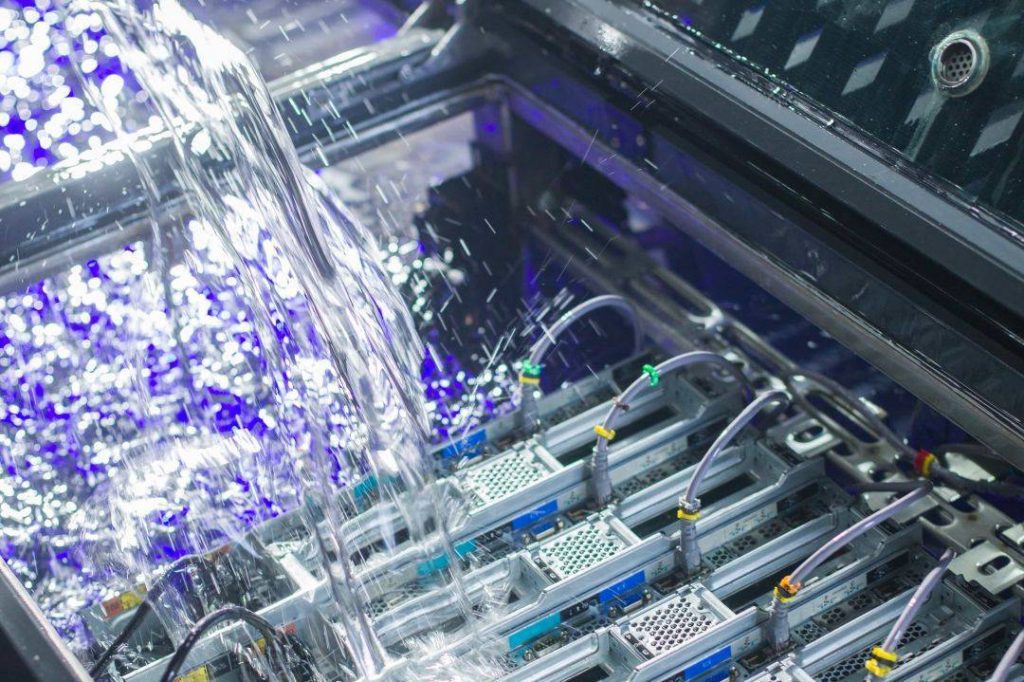
Global industry forecasts confirm strong sector expansion. The global AI server liquid cooling market is set to surge from USD 8.9 billion in 2025 to over USD 17 billion in 2026, representing nearly 100% year-on-year growth. The overall global liquid cooling market will exceed USD 13.8 billion in 2026 and reach USD 21.8 billion by 2027, sustaining a 32% CAGR over the next three years.
Liquid cooling penetration continues accelerating across global hyperscale facilities. The adoption rate in newly built overseas AI data centers rose from 14% in 2024 to 33% in 2025 and is expected to surpass 40% by the end of 2026. Leading North American cloud providers have achieved a liquid cooling penetration rate above 62% for new computing clusters, with high-end AI training facilities projected to reach 80% adoption by 2027. Globally, air cooling is being phased out for all cabinet loads above 50kW, establishing liquid cooling as the universal high-power thermal management standard.
Cold-plate liquid cooling remains the dominant solution, holding over 90% of the global commercial market due to its high compatibility, stable performance, and low operational cost. Immersion liquid cooling is rapidly scaling for ultra-high-density AI training clusters, delivering superior thermal limits for next-generation supercomputing. Beyond data centers, liquid cooling demand continues growing across global new energy sectors, becoming standard for EV battery packs, motors, and electronic control systems. Large-scale energy storage projects across Europe, Southeast Asia, the Middle East, and Latin America are progressively replacing air cooling with liquid cooling, creating sustained demand for high-quality cooling components.
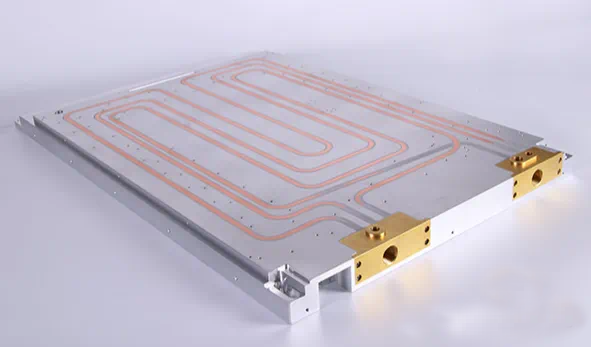
Liquid cooling systems rely on closed-loop coolant circulation, making micro-channel components extremely vulnerable to particulate and chemical contamination. International manufacturers strictly enforce full cleanliness control for all wetted parts. Critical components required to comply with VDA19.1 and ISO16232 include micro-channel cooling plates, quick disconnect UQD couplings, CDU cooling distribution units, manifolds, precision control valves, circulation pumps, and fluid pipelines.
Field operation data indicates that the majority of liquid cooling system failures originate from internal contamination. Machining debris, welding slag, flux residues, rubber particles, and ionic pollutants can block micro-channels, causing flow reduction and localized overheating. Hard particulates may lodge on valve and connector sealing surfaces, resulting in leakage and unplanned downtime. Ionic residues induce electrochemical corrosion, shortening the service life of high-value computing and energy storage equipment. Given the substantial operational losses caused by system failures in global large-scale projects, full-process component cleanliness has become a non-negotiable technical requirement.
Beyond traditional pressure and flow performance testing, international buyers now mandate official VDA19.1 and ISO16232 technical cleanliness reports in bidding documents, technical agreements, and component drawing specifications. Standard global inspection scopes include total contaminant weight, particle size classification, metallic/non-metallic/fiber differentiation, and residual contamination analysis for oil, flux, and ionic impurities, eliminating blockage and corrosion risks at the source.
The global liquid cooling supply chain is experiencing clear market differentiation. Low-end standard cooling plates and basic pipeline accessories face widespread homogeneous competition and shrinking profit margins. In contrast, high-precision components including micro-channel cooling plates, premium quick connectors, and refined CDU fluid assemblies maintain strong global demand and high technical barriers. Consistent cleanliness compliance has become a core competitive advantage for suppliers targeting high-end global liquid cooling projects.
Emerging markets across the Middle East, Central Asia, Southeast Asia, and Latin America are rapidly expanding AI computing infrastructure and grid-scale energy storage capacity. Local clients impose stringent requirements on component reliability, corrosion resistance, and long-term stability, with third-party cleanliness certification becoming a standard delivery prerequisite. This creates significant export opportunities for qualified liquid cooling component manufacturers and professional cleanliness testing service providers.
Industry analysts state that the global liquid cooling sector has transitioned from trial deployment to large-scale commercialization. Market competition no longer focuses solely on thermal performance and cost efficiency, but extends to precision manufacturing and full-cycle contamination control capabilities. Suppliers capable of consistently meeting international cleanliness standards will secure long-term market advantages and fully capture the global liquid cooling export dividend.
FAQ
1. Why are VDA 19.1 and ISO 16232 cleanliness standards important for liquid cooling components?
VDA 19.1 and ISO 16232 are internationally recognized technical cleanliness standards that define procedures for contamination extraction, particle analysis and cleanliness evaluation of industrial components. In liquid cooling systems, even microscopic particles or chemical residues can create significant reliability risks, including microchannel blockage, valve malfunction, coolant contamination and corrosion.
For critical components such as cold plates, quick disconnects (QDs), manifolds, coolant distribution units (CDUs), pumps and coolant piping, compliance with VDA 19.1 and ISO 16232 enables manufacturers to evaluate particle size distribution, identify contamination types and quantify residual contamination levels before system assembly. This helps ensure long-term thermal performance, operational reliability and compliance with global data center and energy industry supply chain requirements.
2. How does technical cleanliness affect the reliability of AI data center liquid cooling systems?
Technical cleanliness has a direct impact on the efficiency, reliability and service life of liquid cooling systems deployed in AI data centers. High-density AI servers generate extremely high heat loads, requiring stable coolant flow through precision microchannel structures. Contaminants including machining swarf, metallic particles, welding residues, fibers and ionic impurities can restrict coolant flow, damage sealing interfaces or accelerate corrosion.
By implementing strict cleanliness controls throughout machining, welding, cleaning, assembly and inspection processes, manufacturers can significantly reduce contamination-related failures and maintenance risks. For global liquid cooling projects, verified technical cleanliness compliance has become a key supplier qualification requirement, alongside pressure resistance, thermal performance and manufacturing capability.

 English
 Français
 Русский
 Español
 Português
 عربي
عربي Get A Quote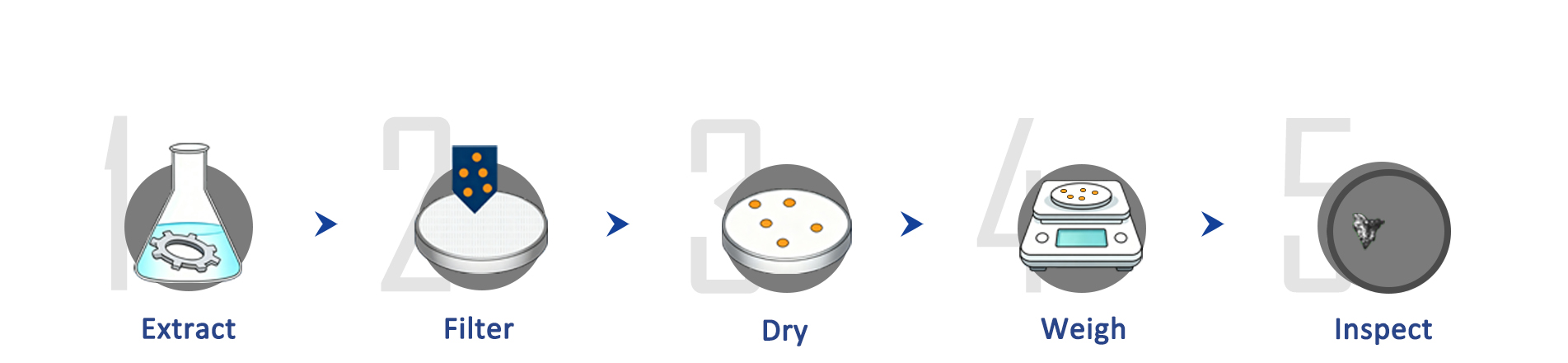




 IPv6 network supported