Technical Cleanliness Extraction: Wet vs Air Dry Extraction Selection Guide
Description: Select wet or air dry extraction for your technical cleanliness test following VDA19.1 & ISO16232. Key steps and selection criteria for automotive & EV components.
Technical cleanliness extraction determines accurate particle contamination results for automotive and EV components. Two mainstream methods are wet extraction and air dry suction extraction, both covered under VDA19.1 and ISO16232 standards.
Wet Extraction
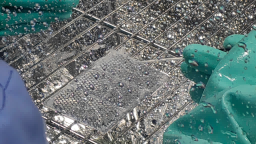
Wet extraction uses cleaning solvent, pressure flushing or ultrasonic treatment to remove particles bonded by oil or grease from part surfaces, blind holes and internal cavities. Contaminants are captured on filter membranes for gravimetric analysis and particle counting.
Pros: High extraction efficiency for oily contaminants; widely accepted by OEM specifications for powertrain, hydraulic and fuel metal parts.
Cons: Liquid exposure risks for sensitive electronics; needs waste handling; large assemblies require disassembly.
Air Dry Extraction
Air dry extraction applies controlled airflow and suction nozzles to collect loose dry particles without liquid contact.
Pros: Non-destructive testing; safe for HV battery modules, PCBs, connectors and harnesses; supports on-site inspection for large assemblies and KLT containers.
Cons: Cannot extract oil-stuck particles; low recovery rate for deep blind holes. Method qualification via decay test is required.
Step-by-step Selection Workflow
1. Review OEM drawing and PPAP specification
2. Check part material compatibility with solvent
3. Identify contaminant type: oily residue or dry loose dust
4. Evaluate part geometry and testing location
5. Perform decay test for method equivalence if switching extraction
Wet extraction is the benchmark for oily metal fluid components. Air dry extraction is ideal for sensitive EV high-voltage assemblies. Proper method selection ensures reliable, audit-ready technical cleanliness data and reduces component failure risks.
Reach out to our experts for your custom technical cleanliness testing setup.
FAQ
Q: Under what circumstances is a Decay Test required, and what are the acceptance criteria?
A: A Decay Test (extraction efficiency verification) is used to evaluate whether the selected extraction method and parameters can adequately and reproducibly recover particulate contamination from the surface and accessible internal areas of a component.
Applicable scenarios: A Decay Test should be considered when establishing new extraction parameters, changing the extraction/cleaning method (e.g., switching from wet extraction to dry extraction), making significant changes to the component material or geometry that may affect extraction efficiency, or conducting PPAP or cleanliness method validation as required by the OEM. In general, the same component is subjected to multiple consecutive extraction cycles, and a decay curve is established based on the results from each extraction cycle.
Acceptance criteria: The acceptance criteria should be determined based on the applicable VDA 19.1 / ISO 16232 methodology, OEM technical specifications, or mutually agreed acceptance criteria. For example, if the customer or internal specification defines that “the amount extracted in the 6th extraction shall not exceed 10% of the cumulative amount extracted during the first five extractions,” this criterion may be used as the applicable acceptance criterion. The specific number of extraction cycles and acceptance limits should be determined according to the applicable standard version and customer requirements. A single fixed value should not be regarded as a universally applicable acceptance criterion for all components and test scenarios.

 English
 Français
 Русский
 Español
 Português
 عربي
عربي Get A Quote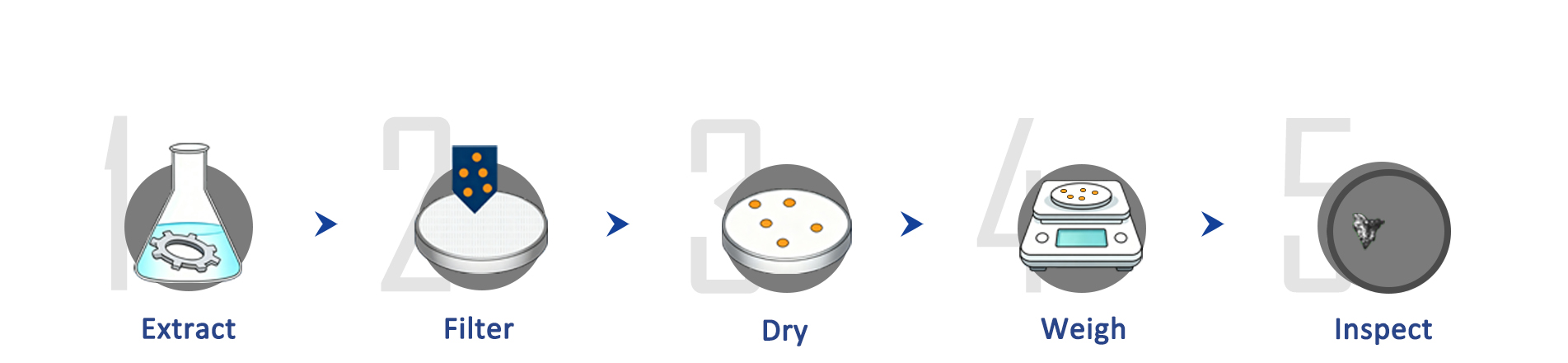




 IPv6 network supported