Key factors affecting the cleanliness inspection of parts
Whether the mass of impurities meets the limit requirement is the most fundamental metric for evaluating cleanliness. Accordingly, ensuring the accuracy of measurement results has become the primary prerequisite for a successful test. An analysis of the entire measurement procedure indicates that all steps prior to weighing exert varying degrees of influence on the final results.
1.Sampling: The sampling process of the test piece must ensure that it remains in its original state or pre-assembly state, with no additional impurities introduced;
2.Disassembly: Destructive disassembly that may introduce new impurities shall be avoided, and impurities unavoidably introduced shall be identified and removed;
3.Cleaning: Cleaning shall be strictly conducted in accordance with the working characteristics and surface conditions of components, to avoid inaccurate impurity collection caused by omitted cleaning of working surfaces or unnecessary cleaning of non-working surfaces. Meanwhile, attention shall be paid to the collection of cleaning fluid to prevent phenomena such as engine oil spillage and cleaning fluid splashing.
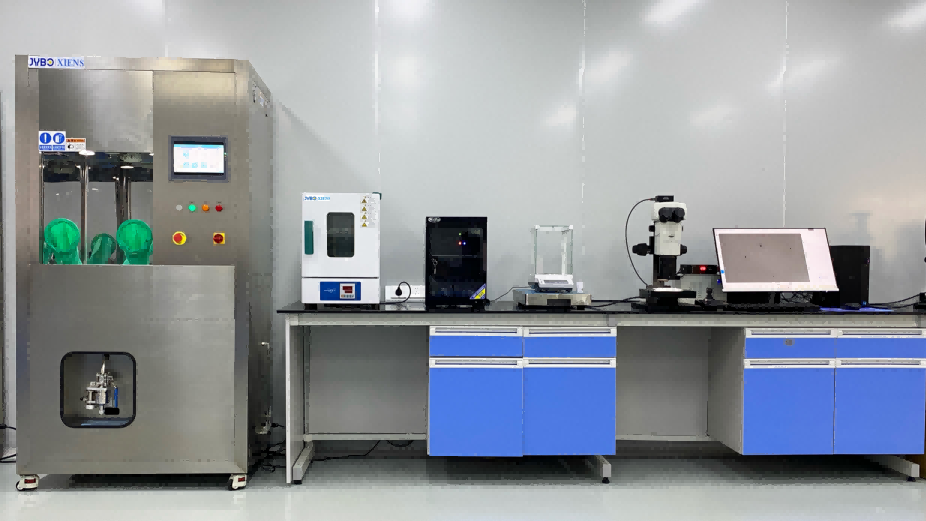
4.Filtration:
This step is the most critical process, since all cleaned cleaning fluids upon completion of pretreatment, including engine oil, must pass through the filtration step to remove impurities. During the process, engine oil is pumped through the filtration membrane by a vacuum pump. Due to the high viscosity, poor fluidity and low volatility of engine oil, the oil tends to adsorb onto the surface of the filtration membrane during filtration, and this adsorbed residue is difficult to detect via visual inspection. If the filtration membrane is not rinsed and dissolved with a large volume of solvent oil cleaning solution, the engine oil residual retained on the membrane cannot be evaporated during the drying process, and will be counted into the weight of impurities during weighing, resulting in significant deviations in the measurement results.
The influence of residual engine oil on weighing results can be verified via a set of comparative experiments: 10 pieces of clean filtration membranes were taken and fully immersed in engine oil for 30 minutes before being removed. Among them, 5 membranes were fully cleaned with solvent oil prior to drying, while the remaining 5 were directly dried. Weighing was conducted after the drying process was completed in accordance with specified temperature and duration requirements.
The average weight of filtration membranes with residual engine oil is approximately 160 mg higher (for the 68# filtration membranes in the experiment, 6 pieces were fully cleaned and 8 pieces were uncleaned). Therefore, if partial engine oil residue remains on the filtration membrane during measurement, an overweight of 10 to several tens of milligrams relative to the true value is difficult to detect, which will exert a significant impact on both the measurement results and the final judgment conclusion.
5.Drying:
In addition to following the specified time and temperature requirements for drying, the post-removal resting period is crucial. After being removed from the high-temperature drying environment, filter membranes are prone to absorbing moisture from the air, which can increase their weight. Therefore, allowing them to cool and rest in a desiccator helps remove excess moisture, ensuring that the weighing results are closer to the true value.
FAQ
Q1: Why does residual engine oil cause significantly higher impurity weighing results in part cleanliness inspections?
A1: Engine lubricants are high-viscosity, low-volatility oils that easily adsorb onto the membrane surface during filtration, often remaining undetectable to the naked eye. If the filtration membrane is not thoroughly rinsed with an appropriate solvent (such as n-hexane or isopropanol) after filtration, the residual oil will fail to evaporate under standard drying temperatures. Consequently, it gets calculated into the total mass of solid residues, resulting in inflated weight measurements.
In real-world testing, residual engine oil can add several milligrams to over a hundred milligrams to the membrane's weight. For part cleanliness limits specified at the milligram or microgram scale, such errors directly lead to false pass/fail judgments.
Tip: Rinsing only the extraction vessel is insufficient to eliminate this error; the filter membrane itself must undergo solvent rinsing. While lightweight cleaning agents evaporate during drying, mineral oils like engine oil and gear oil will not be removed by drying alone.
Q2: Why must dried filter membranes be placed in a desiccator for cooling and resting, and what are the risks of weighing them directly?
A2: If filter membranes are directly exposed to ambient air upon removal from a high-temperature drying oven, they rapidly absorb moisture, resulting in an artificially high mass reading. Concurrently, a hot filter membrane generates thermal air convection inside the analytical balance chamber, causing reading drift and instability.
Placing the dried filter membrane in a desiccator to cool and rest serves two purposes: it isolates the membrane from ambient humidity to prevent moisture reabsorption during cooling, and it allows the membrane temperature to equalize with the balance chamber's ambient temperature. This eliminates thermal convection interference during weighing, ensuring accurate and repeatable results.
Tip: Moisture is already driven off during the oven-drying stage; the desiccator is not intended to dry the membrane. Be sure to allow sufficient cooling time according to standard protocols and only perform weighing after the membrane has cooled completely to room temperature.

 English
 Français
 Русский
 Español
 Português
 عربي
عربي Get A Quote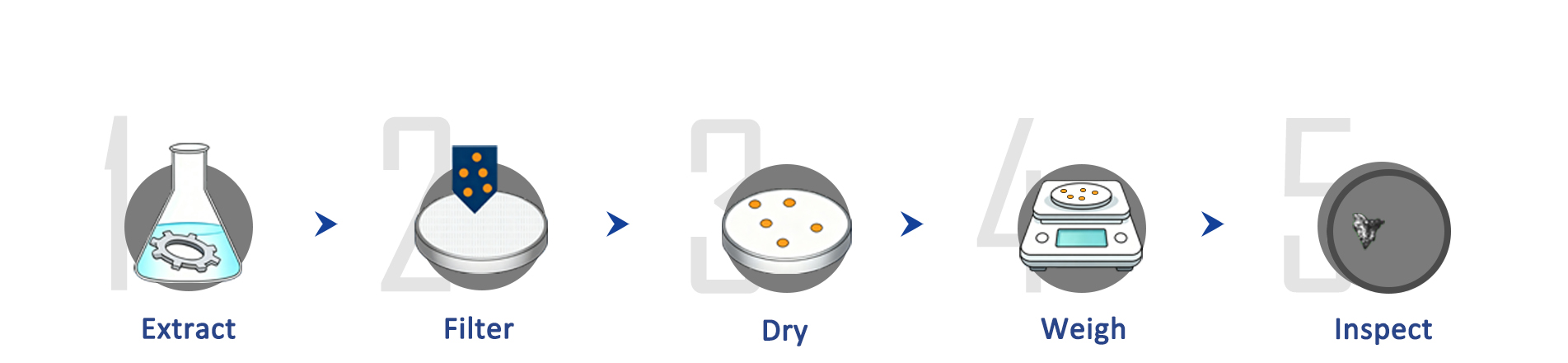




 IPv6 network supported