Key Guidelines for Building a Compliant Technical Cleanliness Laboratory
As precision manufacturing continues to advance, industrial quality standards have become increasingly stringent. Technical cleanliness has evolved from an optional quality indicator into a core requirement for ensuring product reliability, especially for automotive components, hydraulic parts, and precision mechanical assemblies. Micro contaminants such as metal shavings, dust particles, and fibers can lead to component wear, functional failure, and shortened service life. For this reason, establishing a standardized technical cleanliness laboratory has become essential for modern quality control systems.
Many manufacturers misunderstand laboratory construction, assuming that purchasing testing equipment and isolating a simple room is sufficient for valid cleanliness testing. In fact, a qualified cleanliness laboratory is not defined by visual cleanliness, but by stable blank value performance and full compliance with VDA 19.1 and ISO 16232 standards. To deliver repeatable, audit-proof test results, enterprises must follow systematic construction and operational guidelines.
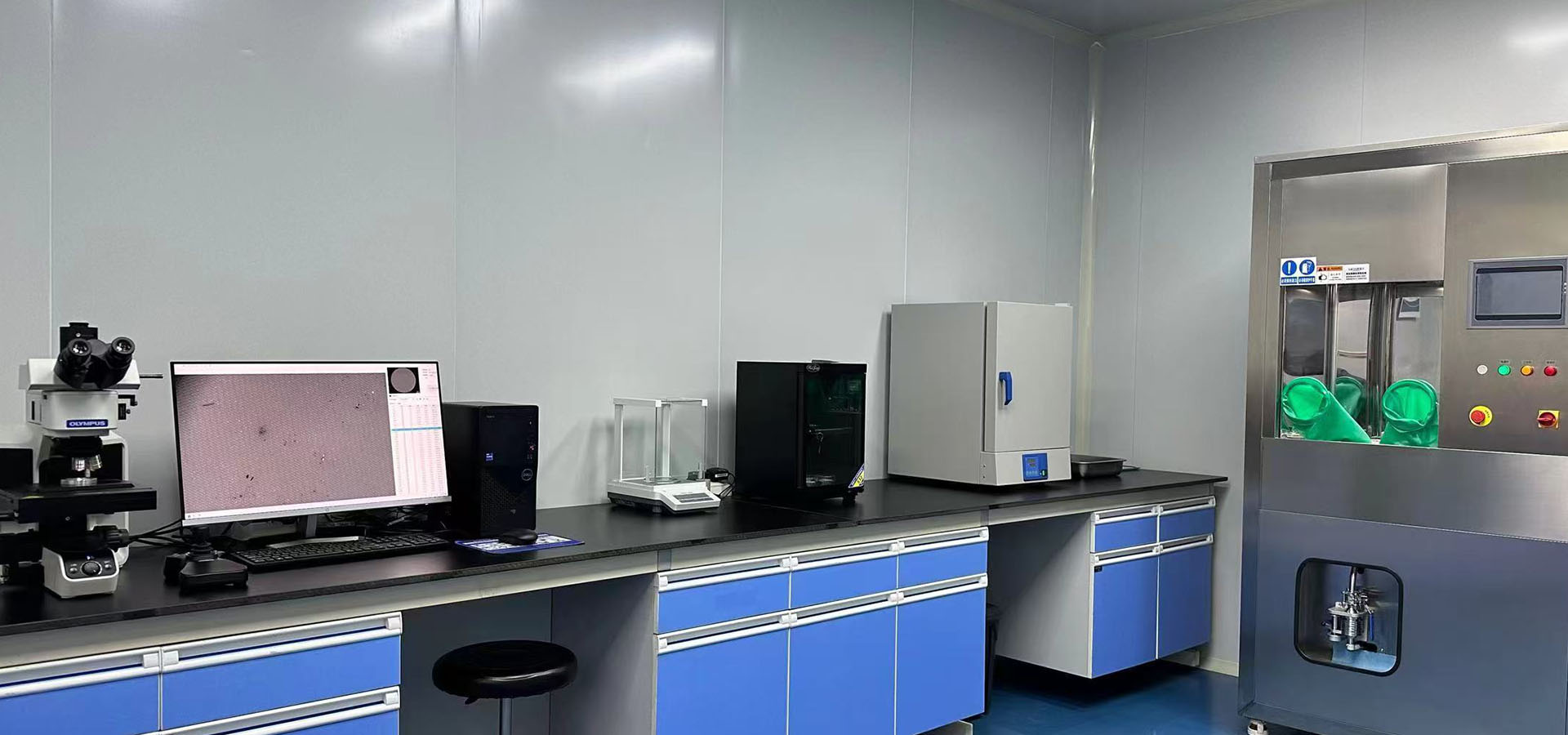
Prioritize Blank Value Compliance for All Laboratory Constructions
The blank value test is the fundamental benchmark for laboratory qualification. It independently evaluates the cleanliness of the testing environment and equipment, eliminating background contamination interference that may affect final measurement data.
Different products and components feature varying cleanliness thresholds. However, a qualified blank value result is a mandatory prerequisite for all cleanliness testing. If the ambient environment or testing equipment carries excessive residual contaminants, blank test failure will invalidate all subsequent component test data, leading to unreliable reports and failed customer audits. Therefore, site conditions, equipment selection, and spatial layout must be verified in the initial planning phase to meet standard blank value requirements.
Environmental Control: Isolation and Positive Airflow Management
Unlike high-class cleanrooms, technical cleanliness laboratories do not require ultra-high overall cleanliness levels. Nevertheless, effective isolation from production pollution is critical. Workshop processes such as machining, grinding, and assembly continuously generate dust, metal debris, and oil mist, which can severely compromise blank test stability.
The testing area must be physically separated from production zones, with minimal personnel access and movement to reduce fiber and dust accumulation. For sites with high ambient pollution, a positive pressure environment is highly recommended. Filtered clean air is supplied from the ceiling, flowing downward toward the floor and exhausting through floor vents or door gaps. This unidirectional airflow effectively discharges suspended particles and maintains a stable testing environment.
In addition, all testing and cleanliness analysis equipment must be placed far from processing tools and pollution sources. Regular surface dust removal and equipment maintenance are required to avoid cumulative contamination.
Reasonable Equipment Selection and Layout Design
Most component cleanliness tests can be performed with standard universal testing systems. The core principle of equipment selection is not high specification, but practical compatibility. Cleanliness cabinet must allow safe, convenient placement of components, enabling full-range flushing and complete collection of contaminants.
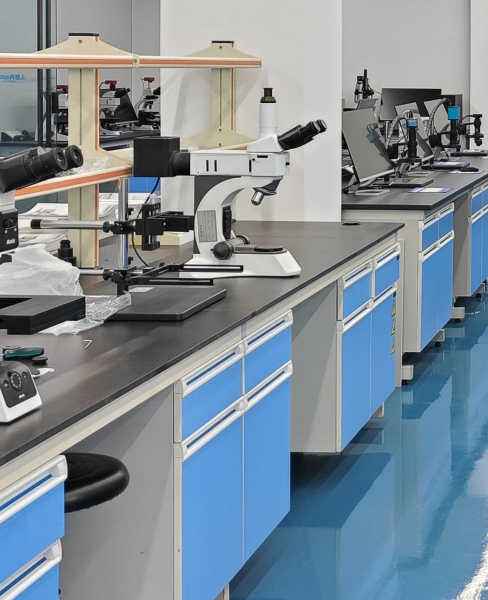
Microscope configuration is particularly critical for particle analysis. Laboratories traditionally adopting the ISO 4406 standard often face adaptation issues when upgrading to ISO 16232 requirements. Older microscopes may fail to meet updated standards for particle size resolution and counting accuracy, resulting in inconsistent and non-compliant test results.
Standardized Operation and Professional Training
Hardware construction alone cannot guarantee long-term laboratory stability. Operator proficiency and standardized workflows play a decisive role in result consistency. Testing personnel must receive professional training to master standardized sample preparation and particle analysis methods.
When customers propose updated cleanliness specifications, the testing team shall communicate thoroughly to align testing procedures with customer process requirements, ensuring all tests meet project-specific compliance standards.
Professional Laboratory Construction Solutions
Building a qualified technical cleanliness laboratory is a systematic project that requires standardized design, precise equipment matching, and standardized operation management. As a professional solution provider, XIENS offers one-stop technical cleanliness test support, including laboratory layout planning, compliant equipment and microscope configuration, and full-process technical guidance tailored to customer requirements and budget. We help enterprises build audit-ready cleanliness laboratories and achieve stable, standardized cleanliness quality control.

 English
 Français
 Русский
 Español
 Português
 عربي
عربي Get A Quote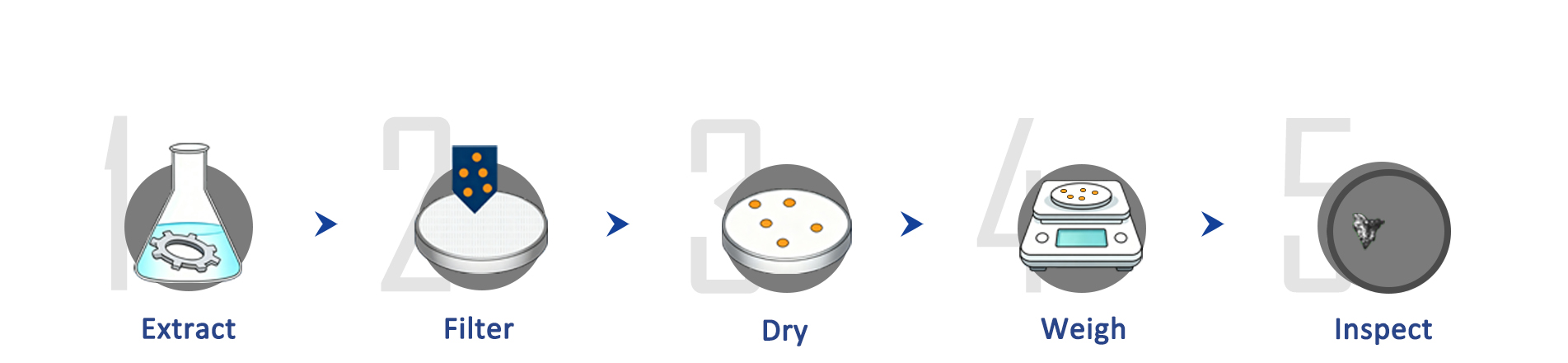



 IPv6 network supported